


Table of Contents
ToggleBathroom walls don’t have to be boring. The right wall decor can turn a purely functional space into a warm, inviting retreat, and farmhouse style delivers that cozy, lived-in aesthetic better than most. It combines rustic textures, vintage finds, and a touch of nostalgia without feeling forced. Whether someone’s gutting a master bath or just refreshing a powder room, farmhouse wall decor offers a practical middle ground: it’s approachable enough for weekend DIYers but flexible enough to suit a range of tastes. This guide walks through the core elements, from reclaimed wood and metal accents to vintage signage and DIY projects, so anyone can curate a bathroom that feels both timeless and personal.
Key Takeaways
- Farmhouse bathroom wall decor combines rustic textures, vintage finds, and moisture-resistant materials like sealed wood and galvanized metal, making it both aesthetically appealing and practical for high-humidity spaces.
- Shiplap, reclaimed wood accents, and floating shelves form the foundation of farmhouse style while providing functional storage without sacrificing the cozy, lived-in aesthetic.
- Farmhouse wall decor thrives on imperfection—weathered finishes, patina, and DIY elements are features, not flaws, making the style forgiving for homeowners who want polished results without excessive detail work.
- Mix typography art, vintage enamel signs, and metal accents in distressed frames to create visual interest; hang pieces at 57–60 inches from the floor for optimal eye-level viewing.
- Three budget-friendly DIY projects—ladder towel racks ($20–$40), mason jar organizers ($15–$25), and stenciled wood signs ($10–$20)—allow homeowners to customize their space affordably while maintaining farmhouse character.
- Always seal wood products, anchor shelves and mirrors into studs, and verify that metal fixtures meet electrical codes to ensure durability and safety in moisture-prone bathroom environments.
What Makes Farmhouse Wall Decor Perfect for Bathrooms
Bathrooms present unique challenges: high humidity, limited square footage, and surfaces that take a beating from water and steam. Farmhouse decor handles all three surprisingly well. Materials like sealed wood, galvanized metal, and enamelware are historically designed to withstand moisture, think old farmhouse kitchens and utility rooms.
The aesthetic also leans functional. Open shelving with rustic brackets, apothecary jars, and wall-mounted soap dispensers all serve a purpose while contributing to the look. There’s no need to sacrifice storage for style.
Another advantage: farmhouse decor is forgiving. A slightly weathered wood sign or a patina’d metal frame doesn’t just tolerate imperfection, it thrives on it. That makes it ideal for DIYers who want a polished result without sweating every detail. The style’s neutral palette, whites, grays, weathered browns, also plays well with most existing tile and fixture colors, so it doesn’t demand a full remodel to look cohesive.
Scalability matters, too. A small powder room can benefit from one or two statement pieces, while a larger master bath can layer in shiplap, multiple frames, and shelving without feeling cluttered.
Rustic Wood Accents and Shiplap for Authentic Farmhouse Style
Wood is the backbone of farmhouse design. Shiplap, tongue-and-groove boards installed horizontally with a slight reveal, has become the go-to wall treatment. It adds texture and visual interest without overwhelming a small space. Real wood shiplap typically runs 1×6 or 1×8 nominal (actual dimensions: 3/4″ x 5.5″ or 3/4″ x 7.25″), installed over drywall with a construction adhesive and finish nails. For bathrooms, choose pine or poplar and seal it with a water-resistant polyurethane or paint. Unsealed wood will warp.
Reclaimed barn wood is another classic move, especially for accent walls or floating shelves. The weathered patina and nail holes tell a story, but buyers need to inspect for rot, insect damage, and structural integrity. Any reclaimed material going into a wet environment should be cleaned, dried, and sealed with multiple coats of marine-grade sealant.
Floating shelves made from 2×6 or 2×8 lumber work beautifully above the toilet or flanking a mirror. For load-bearing support, use heavy-duty brackets rated for at least 50 lbs per shelf, anchored into wall studs. If studs aren’t conveniently located, toggle bolts rated for drywall can work, but they’re less reliable in high-moisture environments where drywall may soften over time.
Another option gaining traction: wood plank accent walls using peel-and-stick planks. These are easier to install and many bathroom design ideas incorporate them for renters or quick refreshes. Just ensure the product is labeled moisture-resistant.
Vintage Signs, Frames, and Typography Art
Typography-based art fits the farmhouse vibe perfectly: simple, direct, and often a little tongue-in-cheek. Look for framed prints with phrases like “Wash Your Hands,” “Farmhouse Bath,” or “Relax, Refresh, Renew.” These work best in neutral black-and-white or muted earth tones.
Vintage enamel signs, salvaged from old general stores, gas stations, or barns, add instant character. Authentic pieces can be pricey, but reproductions are widely available and often indistinguishable once hung. Check for rust-through or sharp edges before mounting, especially if kids use the space.
Framing matters. Distressed wood frames, especially those with a whitewash or weathered gray finish, reinforce the rustic aesthetic. For a gallery wall, mix frame sizes but keep finishes consistent, three or four variations max. Odd-numbered groupings (3, 5, 7 pieces) tend to look more balanced than even numbers.
For DIYers, creating custom typography art is straightforward. Print a design on cardstock, mat it, and frame it. Alternatively, use a wood-burning tool or stencils and paint directly onto a sanded wood plank. Seal finished pieces with a clear acrylic spray to protect against moisture.
Hang art at eye level, typically 57–60 inches from the floor to the center of the piece. In bathrooms, this may need adjustment depending on whether viewers are standing or seated.
Metal and Industrial Elements for Visual Contrast
Farmhouse style isn’t all soft edges and whitewash. Galvanized metal, wrought iron, and aged brass provide visual contrast and keep the look from skewing too country-cute. These materials also happen to resist moisture better than most alternatives.
Wall-mounted wire baskets in black or galvanized steel are workhorses: they hold rolled towels, toiletries, or even potted plants. Look for models with mounting brackets that distribute weight across at least two studs.
Metal sconces flanking a mirror add task lighting and a touch of industrial edge. Edison bulbs in cage fixtures are popular, but check wattage limits, most decorative fixtures max out at 40W incandescent equivalent (6–8W LED). Bathroom lighting should meet local electrical codes, and any fixture within 8 feet horizontally or 3 feet vertically of a tub or shower must be rated for damp or wet locations per the National Electrical Code (NEC).
Another option: repurposed farm tools or industrial hardware as wall art. An old pulley, a section of chain, or a vintage hand saw can be mounted as sculptural elements. Just ensure they’re cleaned, sealed, and securely fastened, toggle bolts or masonry anchors if needed.
For homeowners curious about broader uses of metal and wood pairings, many rustic style approaches offer additional context on balancing textures and finishes across rooms.
Mirrors with Character: Choosing the Right Farmhouse Frame
Mirrors are non-negotiable in bathrooms, so they might as well contribute to the decor. Farmhouse-style mirrors typically feature chunky wood frames with distressed finishes, or metal frames in black, bronze, or brushed nickel.
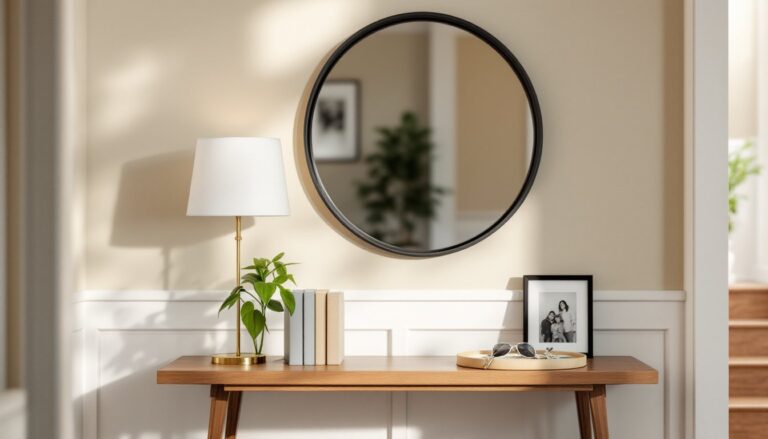
Round mirrors in metal frames, especially those with a shallow drum profile, are a modern farmhouse staple. They soften the angularity of most bathrooms and pair well with square or rectangular vanities. Sizes vary, but a 24–30 inch diameter works for most single-sink vanities. For double vanities, either mount two smaller mirrors or one large rectangular piece.
Rectangular mirrors with reclaimed wood frames add warmth and tie back to shiplap or wood shelving elsewhere in the room. DIYers can build a custom frame using 1×4 boards mitered at the corners and stained or painted to match. Attach the frame directly to the wall around an existing builder-grade mirror using construction adhesive, or frame a standalone mirror and hang it with heavy-duty D-rings and picture wire rated for the weight.
Always mount mirrors into studs when possible, especially larger pieces. A 24 x 36 inch mirror with a wood frame can weigh 20–30 lbs. Use at least two points of contact for anything over 10 lbs.
For additional inspiration on how mirrors can reshape a room’s feel, explore a range of creative wall treatments that use reflective surfaces and framing strategically.
DIY Farmhouse Bathroom Wall Decor Ideas You Can Create Today
DIY projects let homeowners customize the look without blowing the budget. Here are three approachable builds:
1. Ladder Towel Rack
Use a 6-foot wooden ladder (new or vintage) as a leaning towel rack. Sand it smooth, stain or paint, and seal with polyurethane. Lean it against the wall at a slight angle and secure the top with L-brackets into studs to prevent tipping. Cost: $20–$40. Time: 2 hours.
2. Mason Jar Wall Organizers
Mount hose clamps to a painted or stained wood board, then slide pint-sized mason jars into the clamps. Hang the board with keyhole brackets. Use the jars for cotton balls, swabs, or small flowers. Cost: $15–$25. Time: 1 hour. Tools: drill, 1-inch spade bit for drainage (optional), screwdriver.
3. Stenciled Wood Sign
Cut a 1×12 pine board to desired length (18–24 inches is common). Sand, prime, and paint with latex or chalk paint. Use adhesive stencils to apply a phrase or design, then seal with matte acrylic spray. Attach sawtooth hangers on the back. Cost: $10–$20. Time: 2–3 hours (includes drying).
All three projects require basic tools: a drill/driver, tape measure, level, and sandpaper (120- and 220-grit). Wear safety glasses when cutting or drilling, and work in a ventilated area when using sealers or paints.
Those seeking more decorating techniques and inspiration will find a wealth of project ideas and material recommendations applicable across rooms. Many farmhouse remodeling strategies also emphasize DIY approaches that keep costs predictable while allowing creative freedom.
Conclusion
Farmhouse bathroom wall decor succeeds because it’s equal parts practical and personal. Wood, metal, vintage finds, and DIY touches all work together to create a space that feels warm without sacrificing function. The key is balancing textures, keeping moisture resistance top of mind, and not overthinking it, imperfection is part of the charm. With the right mix of materials and a few well-chosen projects, any bathroom can take on that lived-in, welcoming character farmhouse style is known for.