


Table of Contents
ToggleYour hallway table is the first thing guests see, and the last thing you check before leaving the house. It’s a high-traffic piece that holds keys, mail, and whatever you emptied from your pockets. But it can do more than catch clutter. With the right decor approach, that narrow stretch of real estate becomes a focal point that sets the tone for your entire home. Whether you’re working with a 12-inch console or a 60-inch statement piece, the principles are the same: balance function with visual interest, and keep it simple enough to maintain.
Key Takeaways
- A hallway table decor combines function and style by providing essential storage while becoming a visual anchor that sets the tone for your entire home.
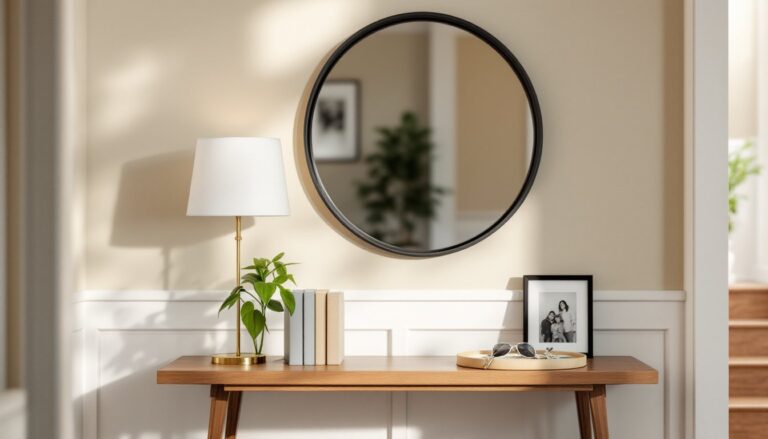
- Layer different heights using a tall anchor piece (lamp or vase), mid-height element (books or plant), and low grounding piece (tray or bowl) to create depth and visual interest in narrow spaces.
- Mount mirrors at 57 to 60 inches from the floor with a width of 50 to 75% of your table width to reflect light and make hallways feel wider while maintaining proper proportions.
- Choose low-light tolerant plants like pothos or snake plants for hallway table arrangements, keeping heights proportional and avoiding varieties that overwhelm narrow consoles.
- Refresh your hallway table seasonally by rotating small accent items while keeping anchor pieces year-round, and limit displayed items so at least 30% of the surface remains clear for functionality.
Why Hallway Tables Are Essential for Style and Function
A hallway table serves two roles: practical storage and visual anchor. It catches daily essentials, keys, sunglasses, dog leashes, so they don’t migrate to kitchen counters. That’s the function half.
The style half is what makes the space feel intentional. An empty hallway reads unfinished. A table breaks up the wall and gives the eye somewhere to land. It also creates vertical space for decor, which is crucial in narrow passages where floor space is limited.
Most hallway tables range from 10 to 16 inches deep, fitting tight corridors without blocking traffic. Standard height is 30 to 32 inches, matching typical sofa table dimensions. If your hallway is less than 36 inches wide, measure twice before buying, you need at least 24 inches of clearance for comfortable passage, per general interior design standards.
When choosing a table, consider traffic flow. If the hallway leads to bedrooms or bathrooms, keep the surface minimal. If it’s near the front door, plan for a catchall tray or bowl.
Choosing the Right Hallway Table for Your Space
Start with measurements, not Pinterest. Measure your hallway width, length, and any doorways that swing into the space. A table that looks proportional in a photo can overwhelm a narrow hall.
Material matters for maintenance. Wood veneers and laminates handle daily wear better than solid hardwood if you’re setting down coffee cups and wet umbrellas. Metal or glass-top tables show fewer scratches but fingerprints are constant.
For tight spaces, look for tables with lower shelves or baskets instead of drawers. Drawers require pull-out clearance, which eats into your walkway. Open shelving keeps shoes, bags, or extra linens accessible without extra depth.
Style should follow your home’s bones. Mid-century modern tables with tapered legs suit ranch-style homes: farmhouse consoles with chunky legs work in colonials or craftsman builds. If your trim and doors are painted, consider a table in a contrasting finish to create separation from the walls.
Skip anything with sharp corners if you have kids or navigate the hallway in the dark. Rounded edges or chamfered corners prevent bruised hips and torn pockets.
Layering Heights: Creating Visual Interest with Decor Items
Flat surfaces look unfinished. Layering different heights creates depth and keeps the eye moving, key for a narrow space where you can’t step back to view from a distance.
Start with a tall anchor piece at one end: a table lamp (24 to 30 inches total height works well), a vase with branches, or a piece of framed art leaning against the wall. This sets your upper limit.
Add a mid-height element in the center or opposite end: a small stack of books, a decorative box, or a potted plant. Aim for 8 to 15 inches here.
Finish with a low, grounding piece: a tray with keys, a small bowl, or a candle. This sits directly on the table surface and anchors the arrangement.
Use odd numbers. Three or five items feel more natural than pairs. If you’re using symmetry, common in formal entryways, flank a centered mirror with matching lamps or candlesticks, but vary the objects on the table surface itself.
Avoid overcrowding. If your table is under 36 inches long, stick to three grouped items max. Longer consoles can handle five, but leave at least 30% of the surface clear for setting things down. Many entrance hall table styles demonstrate this layered approach effectively.
Incorporating Mirrors and Artwork Above Your Table
What goes above the table matters as much as what’s on it. A bare wall reads incomplete: too much creates clutter in an already tight space.
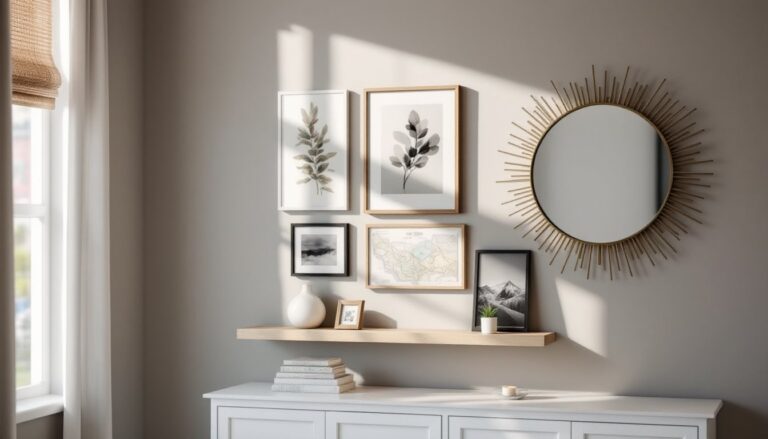
Mirrors are the hallway MVP. They reflect light, make narrow passages feel wider, and let you check your collar before heading out. Hang a mirror so the center sits at 57 to 60 inches from the floor, standard gallery height. For hallways with lower ceilings (under 8 feet), drop it slightly to avoid a top-heavy look.
Mirror width should be 50 to 75% of the table width below it. A 48-inch console pairs well with a 30-inch round mirror or a 36-inch rectangular frame. Too small looks lost: too wide crowds the space.
If you’re using artwork instead, apply the same proportional rule. A single large piece (24 x 36 inches or bigger) makes a stronger statement than a gallery wall in a hallway, where viewers pass quickly and can’t step back to take in a grouping.
Leave 4 to 8 inches of clearance between the table surface and the bottom of the frame or mirror. This gives the decor items on the table room to breathe without visual collision.
Skip heavy ornate frames in narrow hallways, they eat up visual space. Simple frames in black, natural wood, or brass keep the focus on the reflection or art itself.
Adding Greenery and Natural Elements
Plants soften hard lines and bring life to a pass-through space, but hallways are tough on greenery. Most lack natural light and experience temperature swings from opening doors.
Choose low-light tolerant plants: pothos, snake plants, ZZ plants, or philodendrons. These handle fluorescent hallway lighting or indirect sun from a nearby room. If your hallway has zero natural light, skip real plants, they’ll decline fast. Use high-quality faux stems in a weighted ceramic pot instead.
For tables near exterior doors, temperature fluctuations can stress plants. Opt for hardy varieties or rotate them with plants from other rooms weekly to give them recovery time.
Scale matters. A trailing pothos in a 6-inch pot works on a narrow console: a fiddle-leaf fig overwhelms it. Keep plant height proportional to your table, max 18 inches tall for tables under 12 inches deep.
Natural elements beyond plants add texture: a bowl of river rocks, a driftwood piece, or a woven basket for mail. These require zero maintenance and introduce organic shapes that contrast with the straight lines of walls and doorways.
If you’re layering heights, use a plant as your mid-height element. Pair it with a taller lamp and a low tray for visual balance. Homeowners seeking broader decor trends often incorporate similar layering techniques in multiple rooms.
Seasonal and Personal Touches That Make It Yours
A hallway table you can refresh seasonally stays interesting without a full redesign. Swap small elements four times a year to keep the space current without spending hours or serious cash.
Spring/Summer: Fresh-cut flowers or faux stems in bright colors, a bowl of lemons or limes, lightweight linen table runner if you’re using one. Skip heavy textiles and dark tones.
Fall/Winter: Small pumpkins or gourds (real or ceramic), pillar candles in warm tones, a tray with pinecones, or a chunky knit throw draped casually over one end if the table is long enough.
Keep your anchor pieces year-round, the lamp, mirror, or main vase, and rotate smaller accent items. This cuts down on storage and keeps the space cohesive.
Personal touches make a hallway feel less generic. A framed family photo, a small sculpture from a trip, or a vintage find from an estate sale adds character. Avoid cluttering the surface with every memento: choose one or two meaningful pieces and rotate them.
If you collect something specific, old keys, small pottery, vintage bottles, display a curated selection in a shadow box or on a small riser. This beats scattering them across the table where they read as clutter.
Functional personal items can double as decor: a handmade ceramic bowl for keys, a vintage tray for mail, or a refurbished wooden box for dog leashes. These serve your daily routine while adding texture and story. Sites like Decoist regularly feature similar approaches to blending function with personal style across various spaces.
Conclusion
A well-styled hallway table doesn’t require a designer or a big budget. It needs proportion, restraint, and a mix of heights that draw the eye without crowding the space. Stick to pieces that earn their spot, either functional or visually interesting, ideally both. Swap seasonal touches when it feels stale, and remember: if you can’t set your keys down without moving three things, you’ve overdone it.