

Table of Contents
ToggleBamboo wall decor brings texture, warmth, and organic appeal to a room, without the heavyweight installation headaches of stone or reclaimed wood. It’s lightweight, sustainably sourced (when certified), and surprisingly versatile for everything from living room accent walls to spa-like bathrooms. Whether you’re working with full bamboo panels, slat systems, or sculptural art pieces, the material works with both modern minimalist interiors and tropical or bohemian styles. This guide covers the practical side: types available, installation methods, and where bamboo decor actually makes sense in a home.
Key Takeaways
- Bamboo wall decor is lightweight, sustainable, and moisture-resistant, making it an ideal alternative to heavy materials like stone or reclaimed wood for modern homes.
- Three main types—bamboo panels, slat walls, and decorative art pieces—offer flexibility for everything from full accent walls to smaller sculptural focal points that work in any style.
- Proper installation of bamboo wall decor requires wall prep, 48–72 hours of acclimation time, construction adhesive, and finishing nails spaced every 12–16 inches for durability.
- Sealing bamboo with water-based polyurethane or tung oil protects against moisture and extends its lifespan, especially critical in bathrooms and kitchens.
- Bamboo wall treatments work best when used sparingly—one feature wall per room—to avoid overwhelming spaces, and pair well with neutral furniture or natural textiles for cohesive design.
Why Bamboo Wall Decor Is Perfect for Modern Homes
Bamboo checks several boxes for homeowners looking to refresh wall surfaces without major structural work. First, it’s lightweight, real bamboo poles or woven panels weigh far less than hardwood planking or stone veneer, which means less strain on drywall anchors and easier solo installs.
From a sustainability angle, bamboo matures in 3–5 years compared to decades for hardwoods, and responsible harvesting doesn’t kill the root system. Look for FSC-certified bamboo products to confirm ethical sourcing. That said, bamboo is typically imported (often from Asia), so the carbon footprint of shipping should be part of the equation if environmental impact matters to the project.
Bamboo also handles moisture better than many woods, making it a solid choice for bathrooms or kitchens when properly sealed. It won’t warp as easily as pine or MDF in humid conditions. The natural grain and color variation, from pale blonde to deep caramel, add visual interest without needing paint or stain, though you can finish it if the aesthetic calls for it.
Finally, bamboo’s texture creates depth and shadow play under lighting, which makes flat walls feel more dynamic. It pairs well with plaster, concrete, and painted drywall, giving designers flexibility in mixing materials.
Popular Types of Bamboo Wall Decor
Bamboo wall treatments fall into a few main categories, each with different installation methods and visual effects.
Bamboo Panels and Slat Walls
Bamboo panels are engineered products, thin bamboo veneers laminated to plywood or MDF backing. Standard panel sizes run 4×8 feet, similar to sheet goods, and they install like beadboard or wall paneling using construction adhesive and finish nails. Panels come in horizontal grain, vertical grain, or woven (strand) patterns. Horizontal grain shows the classic bamboo knuckle nodes: vertical is cleaner and more contemporary.
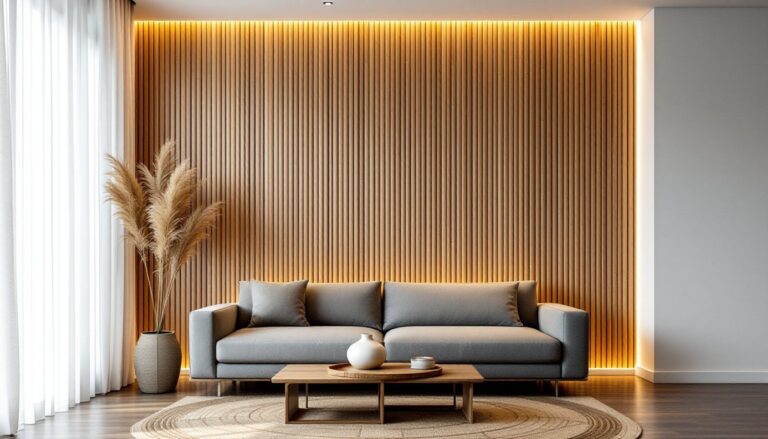
Bamboo slat walls use individual bamboo poles or split halves mounted to a backing board or directly to wall studs. Poles typically range from 1 to 3 inches in diameter and can be spaced evenly or in random patterns. This style works well as a feature wall treatment in entryways or behind beds. Installation requires cutting poles to length (a miter saw or Japanese pull saw works well) and securing them with adhesive or small screws. The gaps between slats add dimension and can hide LED strip lighting for a backlit effect.
For high-moisture areas, sealed bamboo panels or those with marine-grade adhesive backing hold up better than raw poles, which can split or discolor over time if not properly treated. Studies show that properly finished bamboo bathroom wall treatments resist mold and moisture damage when sealed with polyurethane or water-based sealers.
Bamboo Wall Art and Sculptures
Not every bamboo wall project involves full coverage. Bamboo wall art includes woven hangings, framed bamboo mats, and sculptural pieces made from bent or bundled poles. These are non-structural, purely decorative, and typically hang like picture frames using D-rings or sawtooth hangers.
Bamboo sculptures, geometric grids, spirals, or abstract shapes, add focal points without committing to a full wall treatment. They work especially well in modern or eclectic spaces where mixing materials (bamboo with metal, rope, or driftwood) creates visual contrast.
One advantage: bamboo art is renter-friendly. A few command strips or small nails leave minimal wall damage, and pieces are easy to swap out seasonally. For DIYers interested in creating custom pieces, bundled bamboo poles can be lashed together with jute twine or wire, and basic handsaw cuts are all that’s needed for sizing.
How to Install Bamboo Wall Decor (DIY Guide)
Installing bamboo wall decor is manageable for most intermediate DIYers, but prep work and the right adhesive make or break the project.
Materials and Tools
- Bamboo panels, slats, or poles (measure wall square footage and add 10% for waste)
- Construction adhesive (Loctite PL Premium or Liquid Nails Heavy Duty for porous surfaces)
- Finish nails or brad nails (18-gauge, 1¼-inch for panels)
- Level (4-foot minimum), tape measure, pencil
- Miter saw or circular saw for cutting panels: handsaw or reciprocating saw for poles
- Caulk and wood filler (if finishing seams)
- Safety gear: dust mask (bamboo dust is fine and irritating), safety glasses, ear protection for power tools
Step-by-Step Installation (Bamboo Panels)
-
Prep the wall. Remove outlet covers, patch holes with spackle, and sand smooth. Bamboo panels telegraph imperfections, so a flat surface is critical. Wipe walls with a damp cloth to remove dust.
-
Acclimate the bamboo. Let panels sit in the room for 48–72 hours before install. Bamboo expands and contracts with humidity changes: acclimation prevents buckling or gaps after install.
-
Plan the layout. Start from the center of the wall and work outward, or begin at the most visible corner. Dry-fit panels first. If using multiple panels, stagger seams like you would with tile or flooring, avoid four-corner intersections.
-
Apply adhesive. Run a zigzag bead of construction adhesive on the back of the panel, about ½ inch from edges and in a serpentine pattern across the middle. Press firmly to the wall.
-
Nail in place. Use a brad nailer to tack the panel at studs (locate studs with a finder or knock test). Space nails every 12 inches along edges and 16 inches in the field. Nails hold the panel while adhesive cures (24 hours).
-
Cut panels as needed. Score the bamboo face with a utility knife, then cut from the back with a circular saw fitted with a fine-tooth plywood blade to minimize chipping. Wear a mask, bamboo dust is fine and airborne.
-
Finish seams and edges. Fill nail holes with wood filler matched to the bamboo tone. Caulk inside corners with clear or bamboo-colored caulk. Outside corners can be wrapped with bamboo edge trim or left raw for an industrial look.
Installing Bamboo Slats or Poles
For slat walls, cut poles to height, then secure each to wall studs with 2-inch screws driven at an angle through the back of the pole (hidden fastening). Alternatively, mount a ¾-inch plywood backer board to the wall first, then glue and nail slats to the backer, this method works on drywall without needing to hit studs every time.
Space slats evenly using a spacer block (a scrap piece of wood cut to your desired gap width). Common spacing is ½ inch to 2 inches, depending on the look. Tighter spacing feels more solid: wider gaps are airier and show the wall behind.
Sealing and Finishing
Raw bamboo benefits from a protective finish, especially in kitchens or baths. Apply 2–3 coats of water-based polyurethane (satin or matte sheen) with a foam brush or HVLP sprayer. Let each coat dry per manufacturer specs (usually 2–4 hours) and lightly sand between coats with 220-grit sandpaper. This seals the bamboo against moisture and makes it easier to clean.
For a natural look, use tung oil or Danish oil instead, these penetrate the bamboo and enhance grain without adding a glossy film. Two coats, applied with a lint-free rag, are usually sufficient.
Styling Tips: Where to Use Bamboo Wall Decor in Your Home
Bamboo wall decor works in multiple rooms, but placement and scale matter.
Living Rooms and Bedrooms
Bamboo panels behind a sofa or bed create an instant focal point. Pair with neutral furniture to let the texture stand out, or layer with woven textiles and rattan accents for a cohesive organic vibe. Avoid overloading, one bamboo wall per room is usually enough. More than that risks a tiki-bar aesthetic unless that’s the goal.
Bathrooms
Bamboo slat walls or panels work well in powder rooms or behind freestanding tubs. The material’s moisture resistance (when sealed) and spa-like appearance make it a natural fit. Keep bamboo away from direct shower spray unless using marine-grade sealant and ensuring proper ventilation. A bathroom exhaust fan is non-negotiable, standing moisture will eventually degrade any wood product.
Kitchens and Dining Areas
Bamboo backsplashes are less common but doable. Use sealed panels and keep them at least 18 inches away from cooktops to avoid heat damage and grease buildup. Bamboo accent walls in dining nooks or breakfast areas add warmth without the maintenance hassle of a backsplash install.
Entryways and Hallways
Narrow spaces benefit from vertical bamboo slats, which draw the eye upward and make ceilings feel higher. This is also a good spot for bamboo art or sculptural pieces, which fill wall space without overwhelming a small footprint.
Outdoor and Covered Patios
Bamboo fencing panels can double as outdoor wall decor for covered patios or screened porches. UV exposure and rain will weather untreated bamboo quickly, so use exterior-grade sealant or plan for replacement every few years. Alternatively, faux bamboo PVC products resist weather and insects without the upkeep.
For broader wall decor inspiration, mixing bamboo with metal art, mirrors, or floating shelves creates layered visual interest. Resources like Homedit showcase how bamboo pairs with contemporary and mid-century modern styles.
Conclusion
Bamboo wall decor offers a practical way to add texture and warmth to a space without heavy structural work or exotic materials. Panels install like standard sheet goods, slats allow for creative spacing and lighting effects, and art pieces bring the material in at a smaller scale. Proper prep, acclimation, flat walls, and the right adhesive, prevents most install headaches, and sealing protects the investment. Whether tackling a full accent wall or adding a sculptural element, bamboo’s versatility and natural appeal make it a solid choice for creative home projects.