
Table of Contents
ToggleTeen bedrooms serve as multifunctional spaces, study zones, social hubs, and personal retreats all rolled into one. The walls in these rooms often bear the brunt of evolving tastes, from childhood posters to more sophisticated self-expression. For parents and teens tackling a bedroom refresh, wall decor offers the fastest, most affordable way to shift the vibe without structural work or a full remodel. This guide walks through practical, budget-conscious strategies for creating a space that balances personality with flexibility as tastes inevitably evolve.
Key Takeaways
- Teen wall decor offers the fastest, most affordable way to refresh a bedroom without structural changes, making it ideal for evolving tastes and experimental self-expression.
- Removable solutions like peel-and-stick wallpaper, washi tape, command strips, and picture ledges allow teens to personalize their space without damaging surfaces—perfect for renters or commitment-conscious decorators.
- Functional wall decor such as floating shelves, pegboards, magnetic boards, and cork walls serve dual purposes by maximizing storage and organization while creating visual impact.
- Popular trending styles like minimalist Scandinavian, vintage/retro, maximalist eclectic, nature-inspired, and dark academia allow teens to align their wall decor with current aesthetic preferences.
- Involving teens in wall decor decisions with reasonable parameters builds ownership and responsibility while ensuring the space feels authentically theirs as they grow.
- Starting with neutral wall bases and investing in adjustable, modular systems ensures wall decor can adapt to changing interests without costly redecorating every few years.
Why Wall Decor Matters for Teen Spaces
Walls in a teen’s room do more heavy lifting than most homeowners realize. Beyond aesthetics, they define boundaries, showcase identity, and impact mood. A well-considered approach to wall decor can turn a generic bedroom into a space that feels genuinely theirs.
Teens crave autonomy over their environment, and walls are the most visible canvas for that control. Unlike furniture or flooring, which often require parental buy-in and bigger budgets, wall treatments allow for experimentation with minimal risk. Removable options like peel-and-stick wallpaper, washi tape grids, or command strips mean changes don’t require patching drywall or repainting.
From a practical standpoint, thoughtful wall decor can also solve functional problems. Pegboards double as organizers. Floating shelves reduce floor clutter. Cork boards or magnetic paint create dedicated zones for schedules, artwork, or inspiration without the chaos of thumbtack holes scattered across painted surfaces.
The psychological angle matters, too. Studies on adolescent development show that personalized spaces contribute to a sense of ownership and responsibility. When teens have input on their surroundings, they’re more invested in maintaining them. Wall decor becomes a form of self-expression that’s healthier than arguing over curfew.
Budget-Friendly DIY Wall Decor Ideas for Teens
DIY projects give teens hands-on involvement without the price tag of custom furnishings or designer wallpaper. Most of these ideas require basic tools and materials from big-box home stores or craft suppliers.
String lights and fabric draping create ambiance with minimal effort. Battery-operated LED strands (avoiding any fire code issues with open flames) can outline windows, headboards, or ceiling edges. Pair them with sheer fabric or tapestries hung on tension rods for a layered effect. No drilling required, tension rods friction-fit between walls or inside window frames.
Washi tape designs offer endless geometric possibilities. Use painter’s tape as a guide for straight lines, then apply washi tape in chevrons, grids, or abstract shapes. It peels off cleanly from most painted drywall without damaging the surface, making it ideal for renters or commitment-phobes. For a polished look, stick to two or three coordinating colors rather than a rainbow assortment.
Canvas or poster board grids mimic the look of framed art without the hardware. Cut poster board into uniform squares (8″x8″ or 12″x12″ works well), then decorate with magazine cutouts, fabric swatches, or printed photos. Attach with removable adhesive strips in a grid pattern. This approach is particularly popular among creative teens who want to rotate content seasonally.
Gallery Walls and Photo Displays
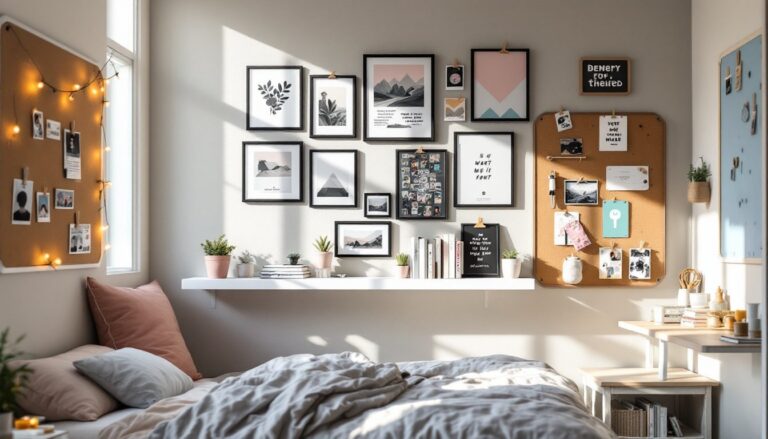
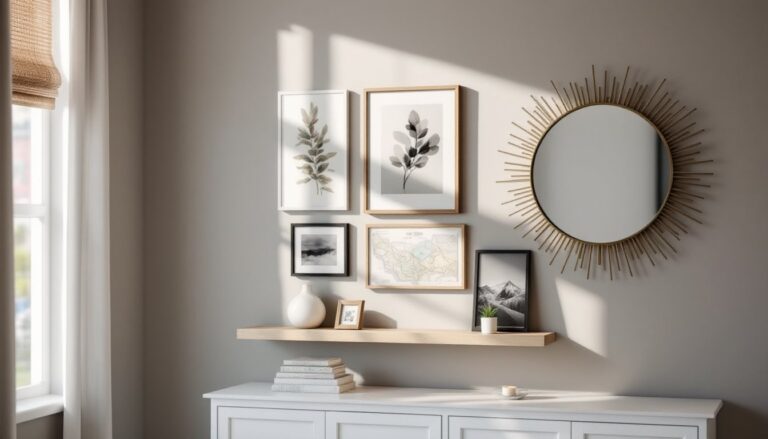
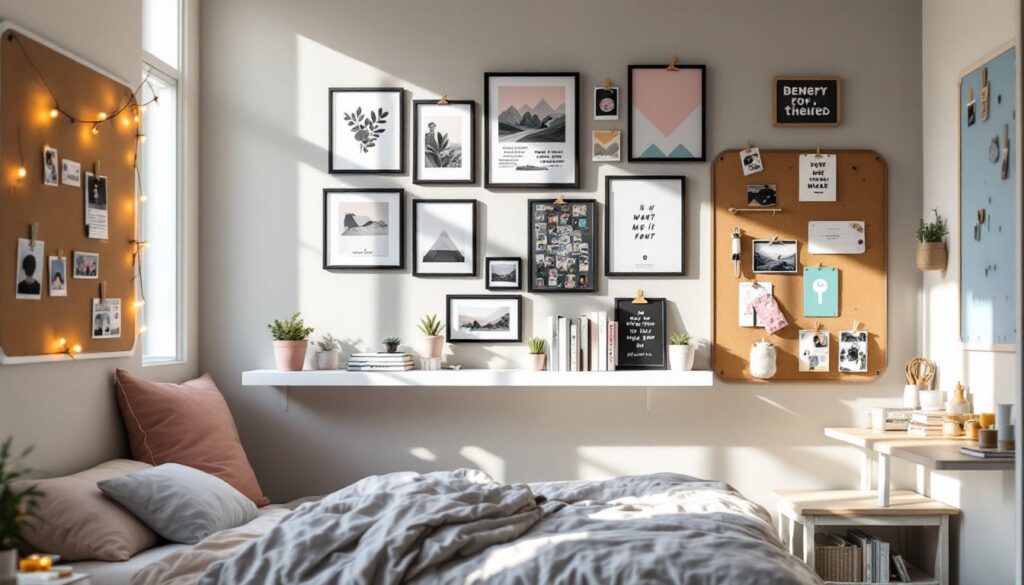
Gallery walls remain a go-to for personalization. The key is planning the layout before hammering nails. Lay frames on the floor, trace them on kraft paper, then tape the paper templates to the wall to finalize spacing. Standard practice: keep 2-3 inches between frames for visual breathing room.
For a damage-free alternative, use picture ledges. Shallow floating shelves (typically 2-4 inches deep) let teens swap photos, prints, or small objects without making new holes. Ledges work especially well for renters or anyone anticipating frequent changes. Mount them level using a stud finder and appropriate anchors, drywall anchors rated for at least 20 pounds if studs aren’t accessible.
Pegboard displays lean functional. A 4’x4′ sheet of pegboard (¼” thickness is standard) can be painted any color, then mounted with 1″ spacers behind it to allow room for hooks and accessories. Teens can clip photos with binder clips, hang small plants, or organize school supplies. It’s the kind of flexible system that adapts as interests shift from sports trophies to art supplies. Sites like IKEA Hackers feature creative pegboard modifications for budget-conscious DIYers.
Trending Wall Decor Styles Teens Love
Trends cycle fast in teen spaces, but a few aesthetics have staying power heading into 2026. Understanding these styles helps narrow choices without locking into something that’ll feel dated in six months.
Minimalist Scandinavian emphasizes clean lines, neutral palettes, and natural materials. Think white-framed prints with simple line art, wooden shelving, and one or two statement pieces, maybe a macramé wall hanging or oversized clock. This style works well for teens who prefer calm, uncluttered spaces or share rooms where compromise is necessary.
Vintage/retro pulls from ’70s, ’80s, and ’90s aesthetics. Neon signs (LED versions for safety and energy efficiency), cassette tape art, and film posters define this look. Thrift stores and online marketplaces are goldmines for authentic pieces. Platforms like Apartment Therapy regularly showcase small-space vintage makeovers with sourcing tips.
Maximalist eclectic goes the opposite direction, layered patterns, bold colors, and mixed media. Tapestries overlap with mirrors, shelves hold plants and collectibles, and every inch serves a purpose. This approach requires editing to avoid visual chaos. A grounding element like a consistent color thread or repeated shape keeps it cohesive.
Nature-inspired brings the outdoors in with botanical prints, pressed flowers in frames, or even a living wall (small-scale, low-maintenance options like pothos or succulents in wall-mounted planters). Humidity and light requirements matter here, south-facing windows work best, and proper drainage prevents water damage to drywall.
Dark academia has gained traction with its moody, library-esque vibe. Deep greens, browns, and charcoal walls (if repainting is on the table) pair with vintage maps, framed classical art prints, and brass or black metal accents. For renters, removable wallpaper in damask or botanical patterns achieves a similar effect without commitment.
Functional Wall Decor That Maximizes Space
Small bedrooms demand dual-purpose solutions. Wall decor that works double duty as storage or organization keeps floor space clear and rooms feeling larger.
Floating shelves above desks or beds create vertical storage without eating into walkways. Standard depth is 8-10 inches for books or decor, 12 inches if storing larger items. Mount to studs when possible: if not, use toggle bolts rated for the expected load (a shelf holding textbooks needs more support than one with a few picture frames). Space shelves 12-15 inches apart vertically for accessibility.
Magnetic boards work for teens drowning in schedules, artwork, or reminders. Apply magnetic primer (usually requires 3 coats for strong hold) to a section of wall, then top with regular paint in any color. Attach with magnets instead of pins or tape. Alternatively, galvanized steel sheets cut to size and framed make portable magnetic boards.
Wall-mounted desks fold up when not in use, freeing space for other activities. These attach directly to wall studs and typically support 50-75 pounds when properly installed. Pair with wall-mounted organizers, cubbies, file holders, or small baskets, to keep supplies off the desk surface.
Hooks and rails handle everything from backpacks to jewelry. A simple wooden rail with metal hooks installed near the door becomes a drop zone for daily essentials. Over-the-door organizers (no hardware required) work for shoes, accessories, or art supplies, though they can interfere with door swing in tight spaces.
Cork board walls go beyond the standard 2’x3′ bulletin board. Cover an entire wall section (or create a large accent wall panel) with cork tiles (typically sold in 12″x12″ squares with adhesive backing). This creates a massive pinboard for evolving collages, vision boards, or rotating artwork. Cork also provides minor sound dampening, helpful in shared living situations.
Tips for Choosing Wall Decor That Grows With Your Teen
The challenge with teen spaces is balancing current preferences with inevitable evolution. What’s cool at 13 rarely resonates at 17. Smart planning avoids costly do-overs every few years.
Start with neutral bases. If repainting is part of the plan, choose versatile wall colors, grays, soft whites, or muted earth tones, that accommodate changing decor themes. Bold color can come through easily swapped elements like bedding, rugs, or wall art rather than paint that requires primers and multiple coats to change later.
Prioritize removable solutions. Peel-and-stick wallpaper, removable wall decals, and command strips allow updates without repair work. Brands have improved significantly in quality: many now offer textures and patterns indistinguishable from traditional wallpaper. They’re particularly valuable for renters or in homes where resale value matters.
Invest in adjustable systems. Modular shelving, track-mounted picture rails, and grid systems adapt as needs change. A shelf grid that holds sports trophies today can display college pennants or houseplants tomorrow without reinstallation. Budget resources like Addicted 2 Decorating document numerous adaptable systems for evolving spaces.
Involve teens in the process, but set parameters. Give them ownership over style choices within reasonable boundaries, budget limits, no permanent structural changes without discussion, and avoiding anything that could damage surfaces beyond normal wear. Frame it as a collaborative project rather than dictating every decision.
Build in flexibility for collections. Many teens cycle through intense interests. Display shelving with adjustable heights or removable dividers accommodates everything from vinyl records to gaming collectibles without needing new furniture when hobbies shift.
Choose quality for permanent elements. If installing chair rails, crown molding, or built-in shelving, use solid materials that will last through multiple decor iterations. These architectural elements add value and provide structure for temporary decor layers.
Conclusion
Transforming a teen bedroom through wall decor doesn’t require contractor-level skills or a massive budget. The most successful spaces balance self-expression with practical function, using removable solutions that adapt as tastes mature. Whether opting for DIY gallery walls, trending aesthetic themes, or space-maximizing functional decor, the goal remains the same: creating a room that feels authentically theirs while maintaining flexibility for the inevitable evolution of adolescent style.