
Table of Contents
ToggleIKEA wall decor offers an affordable, accessible way to fill empty walls without very costly. Whether someone’s working with a tight budget or just looking for quick visual impact, IKEA’s range of frames, shelves, mirrors, and art prints gives DIYers a solid starting point. The real value comes from understanding which pieces work for different rooms and how to install them properly, no one wants a picture ledge pulling out of drywall at 2 a.m. This guide covers the best IKEA wall decor options for 2026, room-by-room recommendations, creative DIY hacks, and the right way to hang everything securely.
Key Takeaways
- IKEA wall decor offers affordable, stylish solutions for any room with frames ranging from $5–$30 and floating shelves at $10–$40, making it easy to experiment with gallery walls without financial risk.
- Proper installation is critical—use stud finders for heavy items, upgrade to toggle bolts rated for 50+ lbs on drywall, and avoid relying solely on included plastic anchors for pieces over 5 lbs.
- Modular IKEA wall decor pieces like LACK shelves and EKET cabinets allow your design to grow over time while maintaining visual consistency across your space.
- Gallery wall success requires planning on the floor first, spacing frames 2–3 inches apart, and centering the grouping at 57–60 inches from the floor for optimal eye level.
- Creative DIY hacks—such as converting RIBBA frames into shadow boxes, mounting LACK shelves as floating nightstands, or customizing BJÖRKSTA canvas prints with fabric—unlock professional-looking custom designs at budget-friendly prices.
Why IKEA Wall Decor Works for Every Home Style
IKEA’s wall decor line appeals to a wide range of tastes because it leans toward minimalist, modular designs that adapt to different aesthetics. A RIBBA frame works just as well in a mid-century modern living room as it does in a farmhouse entryway. The LACK shelf series comes in multiple finishes, white, black, walnut effect, making it easy to match existing trim or furniture.
Affordability is the obvious draw. Most IKEA frames run between $5 and $30, and floating shelves typically cost $10 to $40 depending on size. That pricing allows homeowners to experiment with gallery walls or salon-style arrangements without the financial risk of high-end art.
Another advantage: standardized sizing. IKEA frames use common print dimensions (8×10, 11×14, 16×20, etc.), so swapping out art or photos is straightforward. The FISKBO frame series is especially useful here, it’s frameless, lightweight, and uses a simple clip system that makes swapping prints a 30-second job.
Durability varies by product line. Particleboard-backed frames and lighter shelves work fine for prints and small decor, but anything load-bearing, like the MOSSLANDA picture ledge holding a row of hardcovers, needs proper wall anchors. IKEA includes basic hardware, but many DIYers upgrade to toggle bolts or screw anchors rated for 50+ lbs when mounting into drywall without stud backing.
Finally, IKEA’s modular approach means pieces can grow with a space. Start with a single floating shelf, add a second one a year later, and the visual consistency holds. That’s harder to achieve when mixing brands with different finishes or mounting systems.
Best IKEA Wall Decor Options for Different Rooms
Living Room and Entryway Statement Pieces
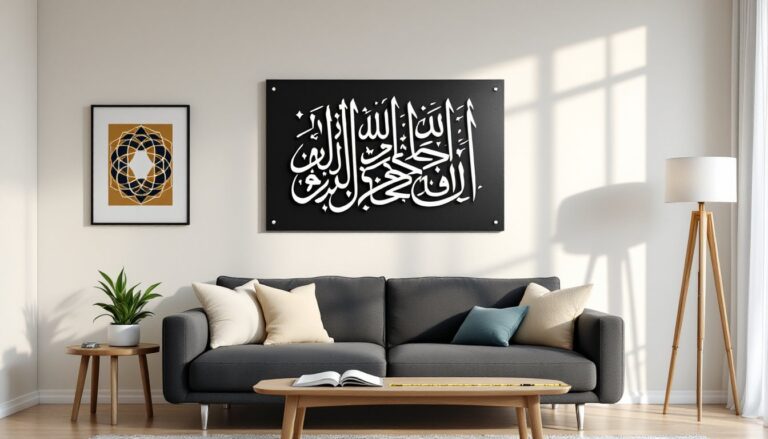
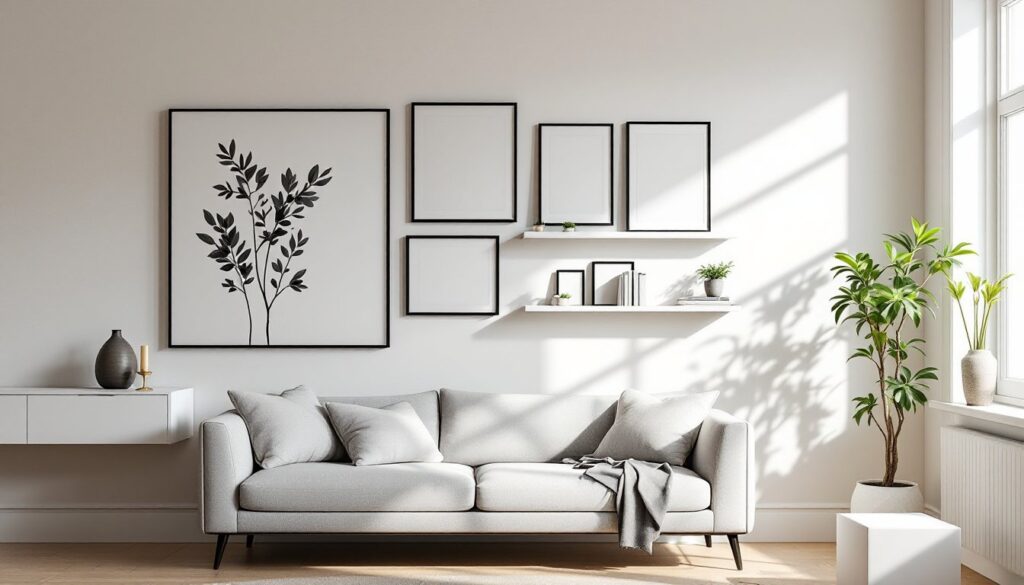
Living rooms and entryways benefit from larger, bolder decor that sets the tone for the entire home. The BJÖRKSTA series offers oversized canvas prints (up to 78¾x55″) in a range of styles, abstract, botanical, and photographic. These work well above sofas or console tables where a single large piece creates more impact than a scattered gallery wall.
For entryways, the EKET wall-mounted cabinet series doubles as both storage and display. Mounting a cluster of EKET cubes (13⅜x13⅜x13⅜” each) creates visual interest while providing slots for keys, mail, or small plants. Install these into wall studs using the included brackets, particleboard cabinets loaded with items can exceed 20 lbs, and drywall anchors alone won’t cut it.
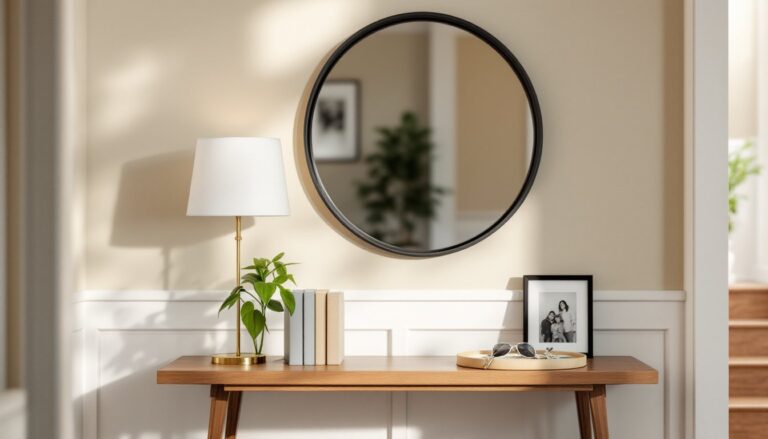
Mirrors are another entryway staple. The STOCKHOLM mirror (31½” diameter) has a walnut veneer frame that adds warmth without overwhelming narrow spaces. When hanging mirrors over 15 lbs, use two D-ring hangers on the back and matching wall hooks driven into studs or anchored with toggle bolts rated for the mirror’s weight plus 50%.
The LACK wall shelf unit (11¾” deep, various widths) works in both rooms. In living areas, it holds books and decor: in entryways, it serves as a drop zone for bags and hats. Mount the unit with at least two screws into studs, the unit’s particleboard construction won’t hold up to side-loading stress without solid backing.
Bedroom and Personal Space Accents
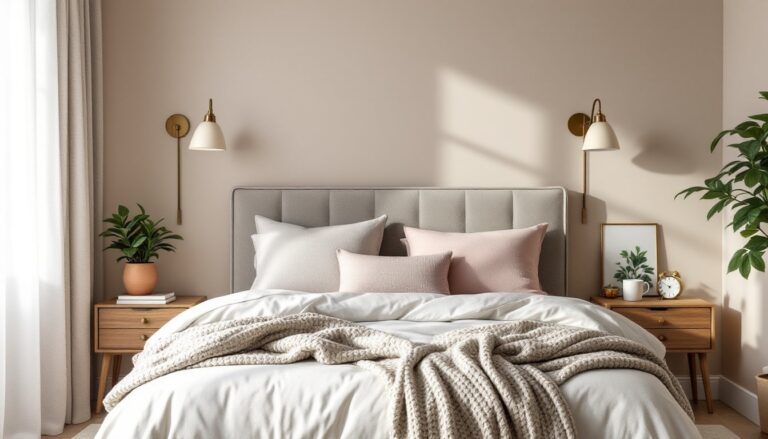
Bedrooms call for softer, more personal wall decor. The YLLEVAD collage frame (for nine 5×7″ photos) is a straightforward solution for a gallery wall behind the bed. The frame uses a single mat insert, so all nine photos need to be the same size, no mixing 4×6 and 8×10 prints.
Floating picture ledges like the MOSSLANDA (21⅝” to 45¼” lengths) let bedroom decor rotate seasonally. These ledges work well for propping framed photos, small plants, or art prints without committing to nail holes for every piece. Install ledges with screws into studs or use two 50-lb toggle bolts per ledge when studs aren’t available. The ledge’s front lip keeps items from sliding off, but it’s only ⅜” tall, don’t overload it with thick books or heavy frames.
For kids’ rooms or craft spaces, the SKÅDIS pegboard system offers modular wall storage. Pegboards measure 22×22″ or 14⅜x22″, and accessories (shelves, hooks, containers) snap into the holes without tools. Mount pegboards with screws into studs for heavier loads, art supplies, tools, or multiple baskets can add up fast. Drywall anchors work for lighter setups (under 10 lbs total), but the pegboard’s thin fiberboard backing won’t distribute weight well if improperly anchored.
Textile wall hangings like the TVINDE or FJÄLLRIPIPA rugs can be mounted with a curtain rod and rings, or with small nails along the top edge. This adds texture and sound dampening in bedrooms, especially helpful in spaces with hardwood floors and minimal soft furnishings.
Creative DIY Projects Using IKEA Wall Decor
IKEA’s simple designs make them ideal starting points for customization. One popular hack: transforming the RIBBA frame into a shadow box. Remove the backing, add a deeper spacer (cut from ¾” pine or MDF), and reassemble to display three-dimensional objects like medals, small tools, or pressed flowers.
Another project involves the MOSSLANDA ledge as a gallery rail system. Mount two or three ledges vertically, spaced 12″ to 18″ apart, and use them to create a rotating art display. This works especially well in hallways or stairwells where traditional hanging isn’t practical. Many DIYers use creative wall arrangements to maximize vertical space without overcrowding.
The LACK shelf can be hacked into a floating nightstand by mounting it at bed height (18″ to 24″ from the floor) and adding a small LED strip light underneath. This requires securing the shelf with 3″ screws into studs, the cantilever load of a lamp, book, and phone charger exceeds what drywall anchors can reliably support.
For a more advanced project, some DIYers combine multiple EKET cubes with paint or contact paper to create a custom wall installation. Painting particleboard requires primer formulated for laminate surfaces (like Zinsser B-I-N or KILZ Adhesion) to ensure paint adhesion. Skip this step, and the paint will chip within weeks.
The SKÅDIS pegboard lends itself to workshop or garage organization. Adding DIY craft storage solutions with hooks, baskets, and custom-cut shelves turns a blank wall into a functional command center. For heavy tools (drills, sanders), reinforce the pegboard backing with a ½” plywood backer board screwed into studs every 16″.
Finally, the BJÖRKSTA canvas prints can be customized with fabric or wallpaper. Remove the canvas from the frame, wrap the frame with a new material, and staple it to the back using a staple gun with ½” staples. This gives the look of a custom fabric panel at a fraction of the cost.
How to Arrange and Hang IKEA Wall Decor Like a Pro
Proper arrangement starts with planning on the floor. Lay out frames, shelves, and other pieces in the intended configuration before making a single hole in the wall. Use painter’s tape to mark the perimeter on the wall, this gives a true sense of scale and spacing.
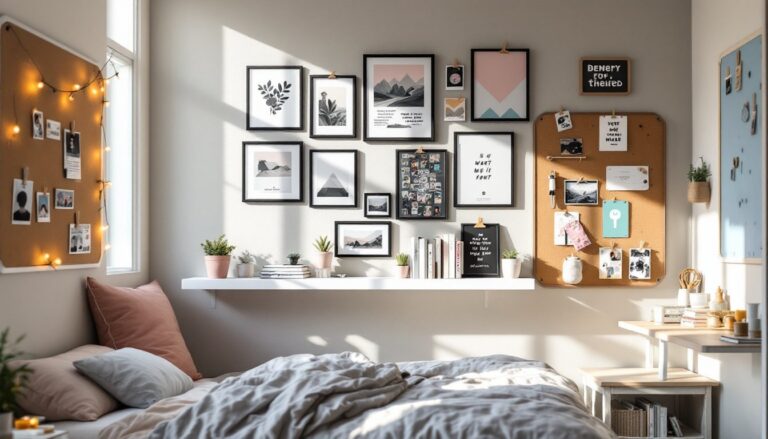
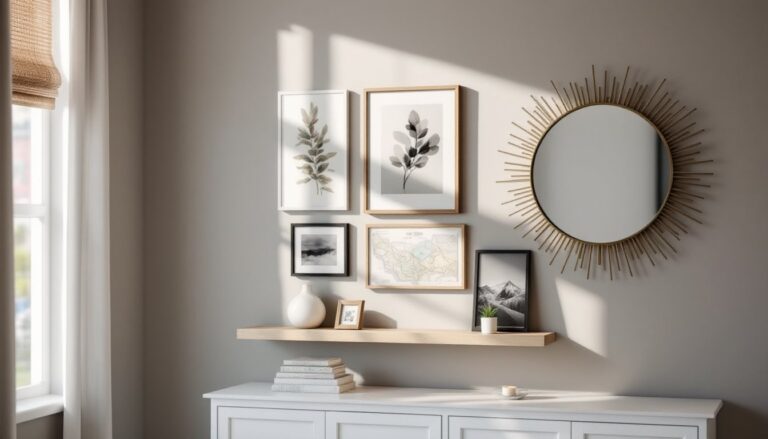
For gallery walls, the standard rule is 2″ to 3″ spacing between frames. Closer spacing (1″ to 2″) creates a denser, salon-style look, while wider spacing (4″ to 6″) feels more modern and minimalist. The center of the grouping should sit at 57″ to 60″ from the floor, average eye level, regardless of ceiling height.
When hanging a single large piece like a BJÖRKSTA canvas, center it horizontally on the wall and position the midpoint at 57″ to 60″. For pieces above furniture, leave 6″ to 12″ of space between the furniture top and the bottom of the frame. Less than 6″, and the decor feels crowded: more than 12″, and it looks disconnected.
Finding studs is non-negotiable for heavier items. Use a stud finder (magnetic or electronic) and mark stud locations with pencil. Standard residential framing places studs every 16″ on center, though older homes may use 24″ spacing. If a stud doesn’t align with the desired mounting point, use toggle bolts or molly bolts rated for the item’s weight. IKEA’s included plastic anchors work for lightweight frames (under 5 lbs), but anything heavier risks pulling out of drywall.
For floating shelves like LACK or MOSSLANDA, use a level to mark the mounting holes. Even ⅛” of tilt becomes obvious once items are placed on the shelf. Drill pilot holes with a bit slightly smaller than the screw diameter to prevent splitting if mounting into studs.
Picture hanging wire is useful for frames without built-in hangers. Attach D-rings to the frame back, one-third of the way down from the top edge, and string braided picture wire between them. The wire should have a slight sag, taut wire doesn’t allow for leveling adjustments. Use a picture hook rated for 1.5x the frame’s weight to account for the angled load.
For accent wall integration, coordinate decor color and scale with the wall treatment. Darker walls handle lighter frames better, and bold patterns benefit from simpler decor to avoid visual overload. Some homeowners find that wall decor hacks offer clever solutions for non-standard spaces.
Finally, step back frequently during installation. What looks level up close might appear crooked from across the room. Having a second person to hold pieces while checking alignment prevents unnecessary wall holes and frustration.
Conclusion
IKEA wall decor delivers solid value when selected and installed thoughtfully. The key is matching the product to the room’s needs, upgrading hardware where necessary, and taking time with layout and leveling. Whether working with frames, shelves, or modular systems, proper mounting and spacing turn budget-friendly pieces into a cohesive, professional-looking result. For inspiration on layout and pairing styles, resources at Decoist offer additional modern design ideas. With the right approach, even a rental apartment can have wall decor that looks intentional and built-in.