

Table of Contents
ToggleMinimalist wall decor strips away the clutter and leaves behind what matters: clean lines, intentional choices, and breathing room for your eyes. It’s not about empty walls, it’s about purposeful ones. Whether someone’s refreshing a dated living room or giving a rental bathroom personality without violating the lease, minimalist decor delivers impact without overwhelming a space. This approach works for any skill level, from hanging a single frame to building custom floating shelves. The key is knowing what to include, what to skip, and how to let negative space do half the work.
Key Takeaways
- Minimalist wall decor prioritizes intentional choices with limited color palettes, simple geometric shapes, and plenty of negative space rather than filling walls with clutter.
- Scale and proportion matter: choose art that’s two-thirds to three-quarters the width of the furniture below it, and leave 12–18 inches of empty space around standalone pieces.
- Floating shelves with concealed brackets, simple line art, and mirrors are versatile minimalist wall decor options that work across living rooms, bedrooms, kitchens, and entryways.
- DIY projects like floating shelves, canvas line art, and wall-mounted dowel displays can be completed in a few hours with basic tools and materials under $20.
- Quality over quantity is the core principle: one well-chosen piece beats five mediocre ones, and functional decor that serves double duty (like a sculptural coat rack) enhances minimalist spaces.
What Makes Wall Decor Minimalist?
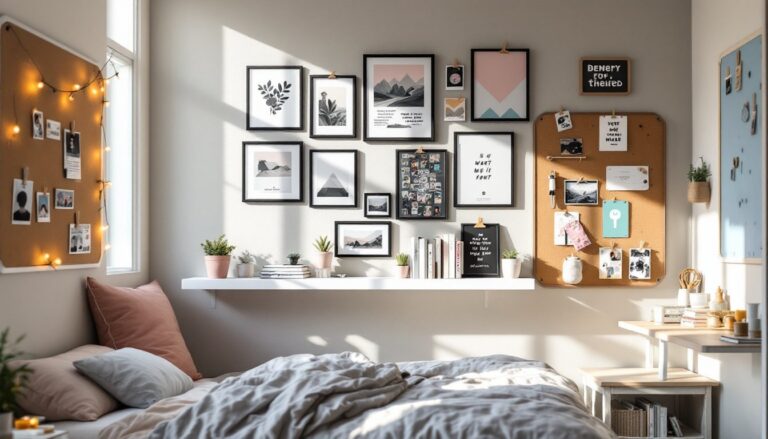
Minimalist wall decor follows a few non-negotiable principles: limited color palettes (typically monochrome, neutral, or two-tone), simple geometric shapes, and plenty of negative space. It’s the opposite of gallery walls crammed with mismatched frames. Think one large canvas instead of twelve small prints. Think a floating shelf with three objects instead of a mantel crowded with tchotchkes.
Materials matter. Natural wood, matte black metal, raw concrete, and unfinished plaster all fit the aesthetic. Glossy finishes, ornate frames, and busy patterns don’t. Texture can add interest, a woven wall hanging or a piece of reclaimed barn wood, but the form should stay simple.
Scale is critical. A 24″ × 36″ framed print centered on a wall makes a statement. A 6″ × 8″ frame floating in the same space looks lost. Minimalism isn’t about going small: it’s about going intentional. If a piece doesn’t add something, color, texture, contrast, it’s taking up space for no reason.
Functionality often overlaps with decor in minimalist design. A wall-mounted coat rack that’s also a sculptural piece of ash or walnut does double duty. A floating shelf isn’t just storage, it’s a horizontal line that breaks up vertical wall space. This is where DIYers can shine, because custom-built pieces often fit minimalist spaces better than mass-market options.
Best Minimalist Wall Decor Ideas for Every Room
Living Room and Bedroom Options
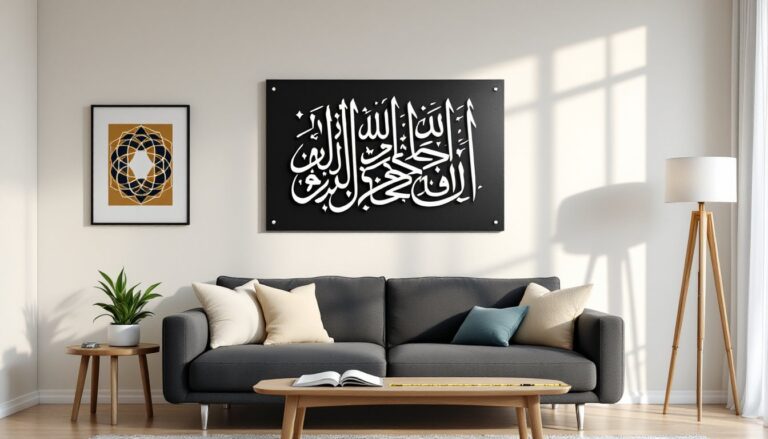
For living rooms, oversized abstract art is the go-to move. A single canvas, think 48″ × 60″ or larger, anchors a seating area without crowding it. Look for pieces with muted tones: charcoal, beige, soft terracotta, or dusty blue. If someone’s working with a rental or doesn’t want to commit to a permanent piece, large-scale removable decals work well and peel off without damaging drywall.
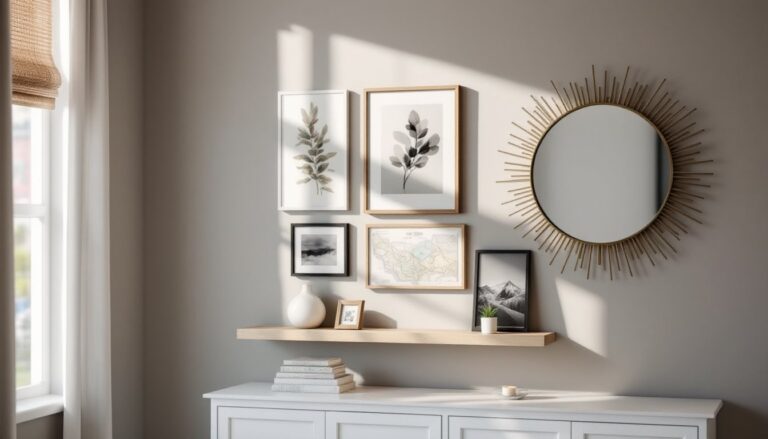
Floating shelves made from solid wood (oak, walnut, maple) add horizontal interest. Keep them shallow, 6″ to 10″ deep, and mount them with concealed brackets rated for at least 50 lbs to avoid sagging. Style them with a small plant, a single hardcover book, and maybe a ceramic vase. That’s it. Three objects per shelf is the sweet spot.
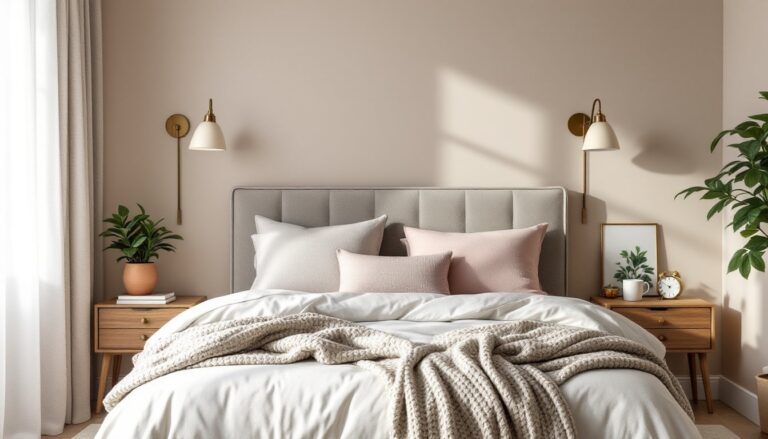
Bedrooms benefit from simple line art or black-and-white photography. A triptych of three matching frames, each 16″ × 20″, hung in a horizontal row above the headboard creates symmetry without fuss. Use a laser level and wall anchors (toggle bolts for drywall, masonry anchors for plaster) to keep everything aligned. Nothing kills a minimalist vibe faster than crooked frames.
Mirrors are underrated. A round mirror with a thin black or natural wood frame reflects light and makes small rooms feel larger. Mount it opposite a window for maximum effect. For bedrooms, a full-length leaning mirror, propped against the wall at a slight angle, adds function and visual height without drilling holes.
Kitchen, Bathroom, and Entryway Accents
Kitchens don’t need much on the walls, but a single large clock or a minimalist pegboard (painted matte white or black) for utensils keeps things functional. If there’s open wall space near a breakfast nook, a small botanical print in a simple frame works without competing with cabinetry.
Bathrooms are tricky because of moisture. Skip paper-based art unless it’s behind glass and well-ventilated. Instead, go with a frameless mirror, a small floating shelf for toiletries, or a single piece of modern wall-mounted decor made from sealed wood or metal. A hook rail made from brass or matte black steel adds function without clutter.
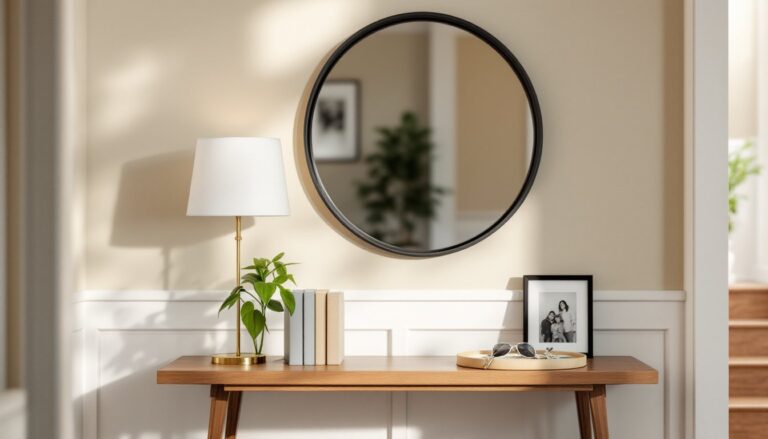
Entryways benefit from one strong focal point. A narrow console table with a single framed piece above it (or a simple mirror) sets the tone for the rest of the house. If wall space is limited, a wall-mounted key rack with clean lines, think laser-cut steel or solid walnut, does the job without adding visual noise. Minimalism in an entryway is about editing ruthlessly: one hook per person, one tray for mail, done.
How to Choose the Right Minimalist Wall Art
Start by measuring the wall. A common mistake is buying art that’s too small for the space. For a piece hung above a sofa, the width should be two-thirds to three-quarters the width of the furniture below it. For a standalone wall, leave at least 12″ to 18″ of empty space on all sides of the frame.
Color should either match the existing palette or provide a single point of contrast. If the room is all grays and whites, a piece with a muted rust or sage accent can anchor the space. But don’t introduce three new colors, that’s not minimalism, that’s chaos.
Framing matters more than people think. Thin metal frames (aluminum or steel, 0.5″ to 1″ wide) work for prints and posters. Natural wood frames with a simple profile, no ornate molding, suit canvases and photography. Frameless options, like a stretched canvas or acrylic-mounted print, are clean but require careful hanging to avoid a cheap look.
When evaluating a piece, ask: does this add something the room needs, or does it just fill space? Minimalist design means curating carefully. Simple decor choices that emphasize quality over quantity tend to age better and require less rearranging down the line. One well-chosen piece beats five mediocre ones every time.
For sourcing, independent artists and design-forward retailers often carry work that fits minimalist spaces better than big-box stores. Platforms that specialize in modern design products can help narrow the search when generic options feel too busy or dated.
DIY Minimalist Wall Decor Projects You Can Make Today
Floating Shelf with Concealed Brackets
- Cut a piece of solid hardwood (poplar, oak, or walnut) to the desired length, 36″ to 48″ is a good starting point, and 8″ to 10″ deep.
- Sand all edges with 120-grit sandpaper, then finish with 150-grit for a smooth surface.
- Apply a clear matte polyurethane or Danish oil (two coats, sanding lightly between coats).
- Locate studs with a stud finder and mark them.
- Install heavy-duty floating shelf brackets (rated for at least 50 lbs) directly into studs using 3″ wood screws.
- Slide the shelf onto the brackets and secure with the included hardware.
This takes about two hours plus drying time. A miter saw gives the cleanest cuts, but a circular saw with a straightedge clamp works fine.
Simple Line Art on Canvas
- Buy a pre-stretched canvas (16″ × 20″ or 24″ × 36″).
- Use painter’s tape to mask off geometric shapes, triangles, rectangles, or a single diagonal line.
- Apply acrylic paint (matte black, charcoal, or a single accent color) with a foam roller for even coverage. Two thin coats beat one thick coat.
- Remove tape while the paint is still slightly wet to avoid peeling.
- Let dry for 24 hours.
No artistic skill required. The tape does the work. Total cost: under $20.
Wall-Mounted Dowel Display
- Cut a hardwood dowel (oak or maple, 1″ to 1.5″ diameter) to 24″ to 36″ length using a miter saw.
- Sand smooth with 150-grit sandpaper.
- Drill a pilot hole on each end, about 1″ from the edge.
- Screw eye hooks into each end.
- Hang from picture wire or leather cord anchored to the wall with screw-in hooks (into studs or with toggle anchors).
- Drape a small woven textile, a print, or a calendar from the dowel using binder clips or small clamps.
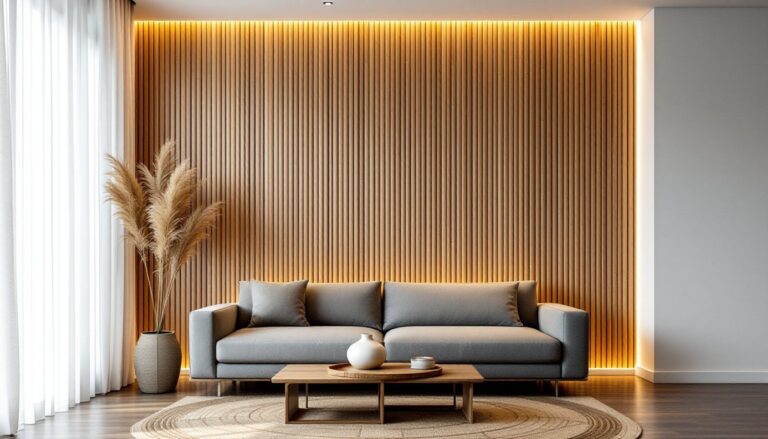
This is a renter-friendly option because it only requires two holes. Swap out what’s hanging whenever the mood strikes. If someone wants to explore accent wall options that pair well with minimalist decor, keeping the surrounding pieces simple ensures the accent wall stays the focal point.
Safety note: Always wear safety glasses when cutting wood and a dust mask when sanding. If using a power saw, ear protection is a must.
Conclusion
Minimalist wall decor isn’t about doing less for the sake of it, it’s about making every piece count. A well-chosen frame, a custom-built shelf, or a single bold canvas can change how a room feels without adding clutter or complexity. The best part? Most of these projects require basic tools, a few hours, and a willingness to edit ruthlessly.