
Table of Contents
ToggleYour master bedroom should be more than just a place to sleep, it’s your personal retreat from the chaos of daily life. Modern master bedroom design strips away the clutter and focuses on clean aesthetics, smart functionality, and thoughtful details that actually improve how you use the space. Whether you’re planning a complete master bedroom makeover or just refreshing the decor, these practical ideas will help you create a room that looks sharp and works better. No vague Pinterest inspiration here, just concrete strategies for updating your primary bedroom with a modern edge.
Key Takeaways
- Modern master bedroom ideas prioritize minimalist design with clean lines, neutral palettes (grays, whites, taupes), and stripped-down essentials that create a functional retreat from daily chaos.
- Layer textures through bedding, flooring, window treatments, and natural materials—such as linen, wood, and jute rugs—to add warmth and visual interest without sacrificing the clean aesthetic.
- Implement layered lighting with separate controls for ambient (recessed LEDs on dimmers), task (swing-arm sconces), and accent sources to set mood and improve functionality throughout the space.
- Optimize furniture placement with 30-36 inches of clearance around the bed, center the bed on the longest wall or opposite the door for a focal point, and use rugs and arrangement to define sitting areas.
- Add personality with one or two statement pieces—a textured headboard, oversized artwork, or accent chairs—while upgrading hardware and drawer pulls for an elevated modern finish.
- Incorporate natural elements like low-maintenance houseplants, wood accents, and stone touches to soften modern lines, improve air quality, and ground the space with warmth and texture.
Embrace Minimalist Design with Clean Lines and Neutral Palettes
Modern master bedroom interior design starts with restraint. Strip the room down to essentials: a bed, nightstands, maybe a dresser or bench. Skip the furniture graveyard of unused chairs and overstuffed armoires.
Neutral palettes anchor the space, grays, whites, taupes, and soft beiges give you a flexible foundation. These aren’t boring: they let you control visual temperature and swap accent pieces without repainting. Consider Benjamin Moore’s Chantilly Lace (OC-65) for crisp white walls or Sherwin-Williams Repose Gray (SW 7015) for a warmer neutral that works in north- or south-facing rooms.
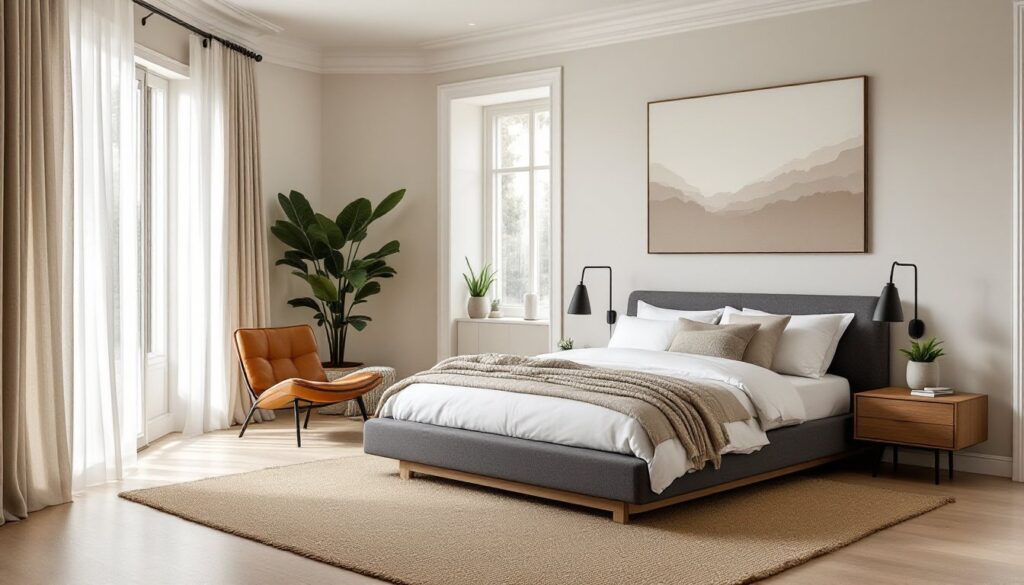
When selecting furniture, prioritize clean-lined pieces with minimal ornamentation. A platform bed with a simple upholstered headboard or a low-profile wooden frame reads more modern than anything with carved details or excessive tufting. Nightstands should be functional, two drawers minimum, and proportional to your bed height (top of the nightstand should align within 2-4 inches of your mattress top for easy reach).
Paint coverage: one gallon typically covers 350-400 square feet with one coat. For a standard 12×14-foot master bedroom with 8-foot ceilings, budget two gallons for walls (accounting for two coats and cutting in around trim).
Wall treatments matter. Skip the accent wall fad unless you’re highlighting architectural features. Instead, run walls and trim in slightly different shades of the same neutral to add subtle depth without breaking the clean line aesthetic.
Layer Textures for Warmth and Visual Interest
A monochrome palette can feel cold if you don’t layer textures. Simple master bedroom ideas hinge on mixing materials, linen, wool, wood, metal, and stone, to create tactile variety without color chaos.
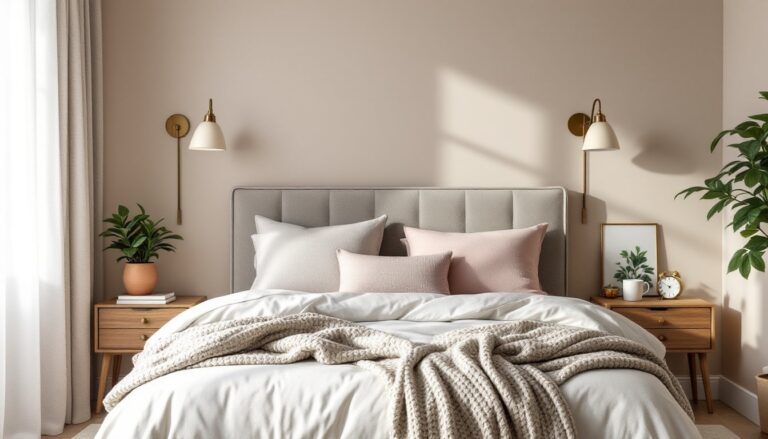
Start with bedding layers: a cotton or linen duvet cover, a lightweight knit or woven throw at the foot of the bed, and pillows in varied fabric weights. Combine smooth percale with nubby linen or a chunky cable-knit. Avoid matching bedroom sets: they read dated.
Flooring contributes significantly to texture. If you’re working with carpet, consider replacing it with engineered hardwood or luxury vinyl plank (LVP). LVP has come a long way, look for products with a 20-mil wear layer minimum for bedroom durability and realistic wood-grain embossing. Installation is straightforward: most LVP uses a click-lock system over existing subfloor (assuming it’s level within 3/16 inch over 10 feet). You’ll need underlayment with a moisture barrier if installing over concrete.
Add a natural fiber rug, jute, sisal, or wool, under or alongside the bed. A 9×12-foot rug works for most master bedrooms: it should extend at least 18-24 inches beyond the sides and foot of a queen or king bed.
Window treatments add another texture layer. Linen or cotton curtains in floor-to-ceiling panels (hung just below the ceiling line, not at window trim height) make the room feel taller and softer. Mount curtain rods 4-6 inches above the window frame and extend brackets 6-12 inches beyond the frame on each side for a fuller look when panels are open.
Incorporate Smart Lighting Solutions
Lighting makes or breaks modern master bedroom decor. Overhead fixtures alone create harsh shadows and kill the mood. You need layered lighting: ambient, task, and accent sources on separate controls.
Ambient lighting sets the baseline. Recessed LED cans (4-inch or 6-inch) on a dimmer provide even coverage, plan one fixture per 25-30 square feet of floor space. If you’re retrofitting and don’t want to open the ceiling, consider smart bulbs in existing fixtures with app-based dimming.
Task lighting goes where you read, dress, or work. Adjustable swing-arm sconces flanking the bed (mounted 5-6 feet off the floor, centered above nightstands) beat table lamps for saving surface space. Look for sconces with 3000K-3500K color temperature, warm enough for relaxation but still functional for reading.
Accent lighting highlights architectural details or artwork. LED strip lighting under a floating bed frame or behind a headboard creates a subtle glow without visible fixtures. Use 12V DC LED strips with an in-line dimmer: they’re safer than 120V AC strips and easier to install without hard-wiring (though you’ll still need access to an outlet or junction box for the transformer).
If you’re adding new electrical work for lighting, you’ll likely need a permit, check with your local building department. Hiring a licensed electrician is the smart call unless you’re comfortable working inside your breaker panel and pulling wire through walls (and even then, permit inspections are required in most jurisdictions).
Smart switches (Lutron Caseta, Leviton Decora Smart) let you control multiple lighting zones from your phone or voice assistant. They replace standard switches in single-gang or multi-gang boxes, no neutral wire needed for most models, but double-check compatibility with your existing wiring.
Create a Functional Layout with Strategic Furniture Placement
Modern master bedroom design prioritizes flow and function. Measure your room and furniture before you move a single piece, this isn’t guesswork.
Leave 30-36 inches of clearance around the bed for comfortable movement and making the bed without contorting yourself. If you’re tight on space, you can get away with 24 inches on one side if the other side and foot have full clearance.
Bed placement typically centers on the longest wall, but if that wall has windows, consider the wall opposite the door for a focal point when you enter. Avoid placing the bed directly under a window unless you’re committed to blackout treatments, temperature fluctuations and light leaks will mess with your sleep.
If your master bedroom includes a sitting area, define it with furniture arrangement and a rug rather than trying to visually divide the room with paint or awkward partial walls. A pair of accent chairs and a small side table in a corner with good natural light creates a reading nook without closing off the space.
Storage is critical in ideas for master bedroom layouts. Built-in closets are ideal, but if you’re working with a older home that has insufficient closet space, a sleek wardrobe or PAX-style modular system keeps the modern vibe better than freestanding dressers scattered around. Mount anything wall-hung into studs (16 inches on center in most framed walls) or use appropriate toggle anchors rated for the load if you’re hitting drywall between studs.
Add Statement Pieces That Reflect Your Personality
Minimalism doesn’t mean sterile. One or two bold pieces give your master bedroom personality without cluttering the aesthetic.
A statement headboard is the obvious choice, upholstered in a textured fabric like bouclé or velvet, or crafted from reclaimed wood planks, live-edge slabs, or even metal tubing for an industrial look. If you’re DIYing a headboard, standard dimensions run 2-4 inches wider than your mattress on each side (queen mattress is 60 inches wide, so your headboard would be 64-68 inches). Secure it to the wall with French cleats or Z-clips rather than attaching it to the bed frame, it’s more stable and won’t shift when you adjust the bed.
Alternatively, a piece of oversized artwork above the bed (or on the wall opposite) serves as the focal point. When working with modern bedroom design ideas, aim for art that’s roughly two-thirds the width of your headboard or furniture piece below it.
Accent chairs in an unexpected material, leather, cane, molded plastic, add function and style. A mid-century modern chair or a sculptural piece works well in a corner or next to a window.
Don’t overlook hardware and fixtures. Swapping builder-grade door handles, drawer pulls, and closet rods for matte black, brushed brass, or polished nickel upgrades the whole room for under $100 in materials. It’s a one-afternoon project with a screwdriver and maybe a drill for new handle placements.
Integrate Natural Elements and Greenery
Bringing the outdoors in softens modern lines and improves air quality, assuming you keep the plants alive.
Houseplants suited to bedroom conditions (lower light, inconsistent watering) include pothos, snake plants (sansevieria), and ZZ plants. These tolerate neglect better than fiddle-leaf figs or monsteras. Place them on nightstands, dressers, or in floor planters if you have space.
Pot selection matters for the aesthetic. Stick with matte ceramic, concrete, or natural terracotta rather than glossy or overly decorative planters. Ensure pots have drainage holes: sitting water kills more houseplants than underwatering. Use a saucer underneath to protect wood furniture.
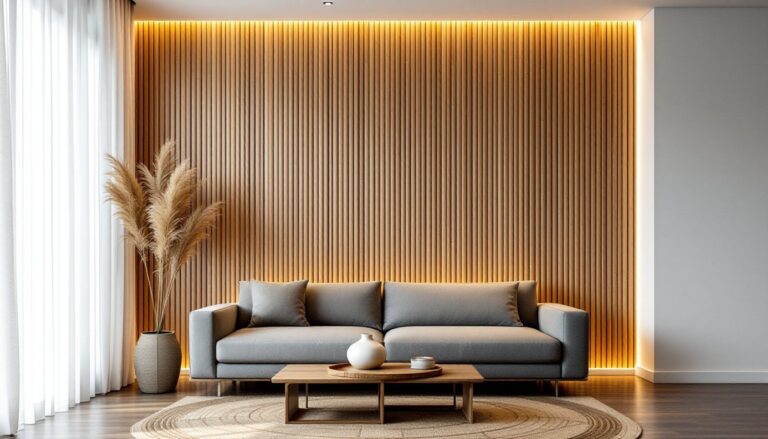
Wood elements, a live-edge bench at the foot of the bed, floating shelves in walnut or oak, or even wood slat wall treatments, add warmth. If you’re installing wood slats (a popular modern detail), run them horizontally for a calming effect or vertically to emphasize ceiling height. Use 1×2 or 1×3 furring strips (actual dimensions: 3/4″× 1-1/2″ or 3/4″× 2-1/2″) spaced evenly and attached to studs or blocking with finish screws. Stain or seal with a matte polyurethane or hard wax oil for a natural look.
Stone or mineral accents, a marble tray on the dresser, a concrete planter, or stone bookends, ground the space with natural weight and texture. These are finishing touches, not focal points, but they reinforce the connection to natural materials that define modern master bedroom interior design.
Window access to natural light is the biggest factor. If your master bedroom lacks good daylight, consider whether a window enlargement is feasible (requires a contractor, potential structural work if you’re cutting into load-bearing walls, and permitting). Short of that, keep window treatments minimal and use sheer or semi-sheer fabrics during the day to maximize light.
Conclusion
Modern master bedroom makeover ideas come down to intentional choices: pared-down furniture, layered textures, smart lighting, and a few statement pieces that matter to you. There’s no single formula, but the principles, clean lines, neutral foundations, natural materials, and functional layouts, give you a framework that works whether you’re painting and rearranging this weekend or planning a gut renovation. Start with one area, get the details right, and build from there.