


Table of Contents
ToggleCreating a coastal bedroom doesn’t require oceanfront property. With the right approach to color, texture, and material selection, any bedroom can capture the relaxed, breezy feel of a beach house. This guide walks through the practical elements, paint choices, furniture construction, textiles, and finishing touches, that deliver an authentic coastal aesthetic. Coastal bedroom decor is less about seashell tchotchkes and more about honest materials, natural light, and a palette that references sand, sky, and water. Whether working with beach themed bedroom ideas for adults or designing a full beach house bedroom, the fundamentals remain the same: keep it simple, use durable materials, and let the architecture breathe.
Key Takeaways
- Coastal bedroom ideas succeed with a neutral color base of whites, soft grays, and sand tones, accented with subtle blues and seafoam rather than bold, saturated hues.
- Choose durable furniture in natural wood finishes, solid wood construction, and simple designs—avoid particleboard and heavy four-posters in humid coastal environments.
- Layer textures with natural, unrefined materials like jute rugs, woven baskets, linen textiles, and weathered wood to create authentic beach house character without synthetic alternatives.
- Select bedding in 100% cotton or linen blends with striped patterns or solid tones, and layer with lightweight quilts and chunky knit throws for visual depth.
- Keep decorative accents minimal and intentional—display a few well-chosen pieces like botanical prints, mirrors, or ethically sourced shells rather than filling surfaces with clutter.
- Implement layered, soft lighting with proportional table lamps, simple fixtures, and natural light through unobstructed windows to maintain the calm, breezy coastal bedroom aesthetic.
Essential Color Palettes for a Coastal Bedroom
A successful coastal color scheme pulls from the natural environment. Start with a neutral base, whites, soft grays, warm sand tones, or greige (a gray-beige hybrid). These work as wall colors and anchor the room without competing with furniture or textiles.
Cool accent colors include soft blues (think weathered denim or faded navy), seafoam green, and pale aqua. These reference water and sky but shouldn’t overwhelm. Use them on trim, a single accent wall, or built-in cabinetry. For a coastal decor bedroom with more warmth, layer in driftwood browns, taupe, or bleached linen shades.
When selecting paint, opt for low-VOC or zero-VOC formulas in eggshell or satin finish for walls, these hold up better to humidity and cleaning than flat paint. Semi-gloss works well on trim and doors in coastal environments where moisture resistance matters. A gallon of quality interior paint covers roughly 350–400 square feet per coat, so measure wall area before purchasing.
Avoid overly saturated colors. Coastal palettes succeed through subtlety. If using a bold blue, limit it to a headboard wall or ceiling. White or off-white ceilings help bounce natural light and keep the space open.
Choosing the Right Furniture for Coastal Style
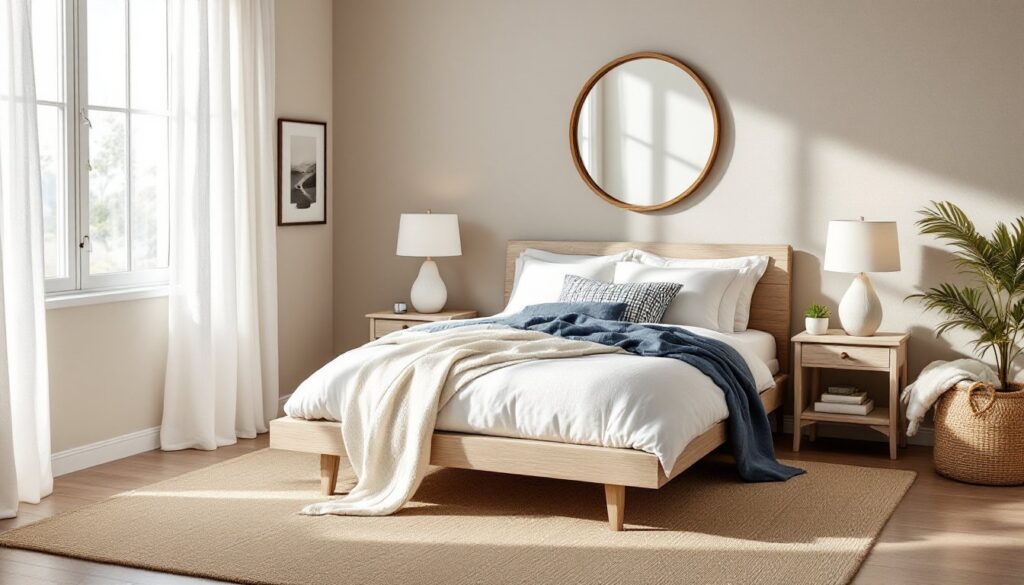
Coastal furniture prioritizes natural wood finishes and simple construction. Look for pieces in white oak, pine, or teak with visible grain and minimal stain. Painted furniture works too, crisp white or weathered finishes in chalk paint give a beach house bedroom feel without excessive distressing.
Platform beds and low-profile frames suit the aesthetic better than heavy four-posters. A queen-size bed frame in solid pine or reclaimed wood, left natural or finished with a clear matte polyurethane, fits most coastal bedroom design schemes. If budget allows, choose mortise-and-tenon joinery over dowel construction for longevity.
Dressers and nightstands should be functional and unfussy. Rattan, wicker, or seagrass drawer fronts add texture without bulk. For a coastal bedroom decor approach that leans modern, consider pieces with metal hairpin legs or simple tapered wood legs.
Avoid particleboard and MDF in humid climates, they swell and delaminate over time. Solid wood or marine-grade plywood holds up better. If purchasing flat-pack furniture, check that drawer glides are metal (not plastic) and that backs are reinforced.
Keep furniture scaled appropriately. Overstuffed upholstered pieces feel out of place. A low-slung linen or cotton-slipcover chair works better than a bulky recliner.
Natural Textures and Materials That Bring the Beach Indoors
Texture is what separates a successful coastal bedroom from a generic blue-and-white room. Prioritize natural, unrefined materials with visible imperfections, woven fibers, raw linen, unpolished wood, and stone.
Jute or sisal area rugs are practical and on-theme. A 5×8 or 8×10 rug in natural fiber adds warmth underfoot and helps define the bed area. These materials are durable but can shed initially: vacuum frequently during the first few weeks. For softer underfoot feel, layer a smaller cotton or wool rug over jute.
Incorporate woven baskets for storage, seagrass, rattan, or wicker bins handle blankets, off-season bedding, or laundry. These are more forgiving than rigid storage boxes and add visual softness.
Wood elements should look weathered or unfinished. A driftwood mirror frame, reclaimed barn wood headboard, or salvaged plank shelf brings organic character. If sourcing driftwood, rinse it thoroughly and let it dry for several days to prevent mold or insect issues.
Many home styling guides recommend introducing stone or ceramic accents, think a small ceramic vase, a stoneware lamp base, or a travertine tray on a dresser. These ground the room and contrast nicely with softer textiles.
Avoid synthetic materials that mimic natural ones. Real linen, cotton, and wood always outperform polyester “linen-look” or plastic “rattan” alternatives in both appearance and durability.
Coastal Bedding and Textile Choices
Bedding sets the tone for beach bedroom ideas. Choose 100% cotton, linen, or linen-cotton blends for sheets and duvet covers. Linen breathes well, softens with washing, and has the relaxed, slightly rumpled look that suits coastal interiors. Thread count matters less than fiber quality: 200–400 thread count linen or percale cotton feels crisp and cool.
For color, stick with whites, soft grays, chambray blues, or natural linen tones. Striped patterns, navy and white, ticking stripes, or broad horizontal bands, reference nautical themes without being literal. Avoid bedding with printed seashells or anchors unless going for a kids’ room.
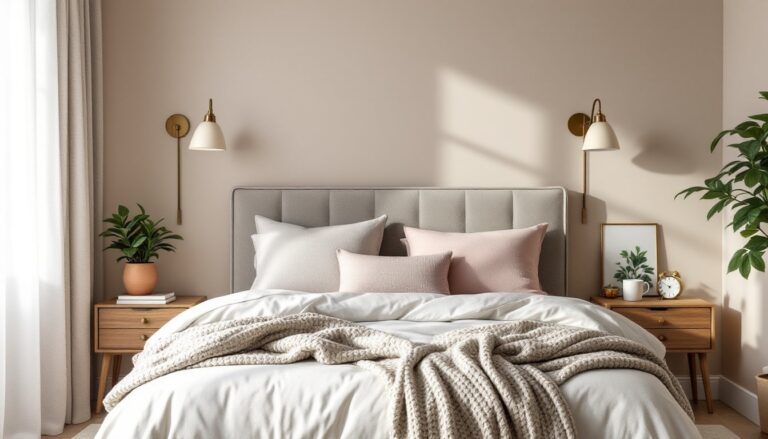
Layer textures: a lightweight cotton quilt or matelassé coverlet over linen sheets, with a chunky knit or waffle-weave throw at the foot of the bed. In warmer months, skip the duvet and use just a flat sheet and coverlet.
Window treatments should be minimal. Linen or cotton curtains in white or natural tones diffuse light without blocking it. Hang panels on simple rods, nothing ornate. For privacy, consider cellular or woven wood blinds behind the curtains. Blackout linings work if needed but avoid heavy drapes.
Pillows can mix solids and subtle patterns. A couple of linen Euro shams and standard pillowcases in coordinating tones keep the bed from looking overly matched. Toss pillows in indigo, faded coral, or striped ticking add interest without clutter.
Decorative Accents and Accessories for Beachy Charm
Accessories should feel collected, not coordinated. The goal is to suggest a beach house that’s been lived in, not a showroom.
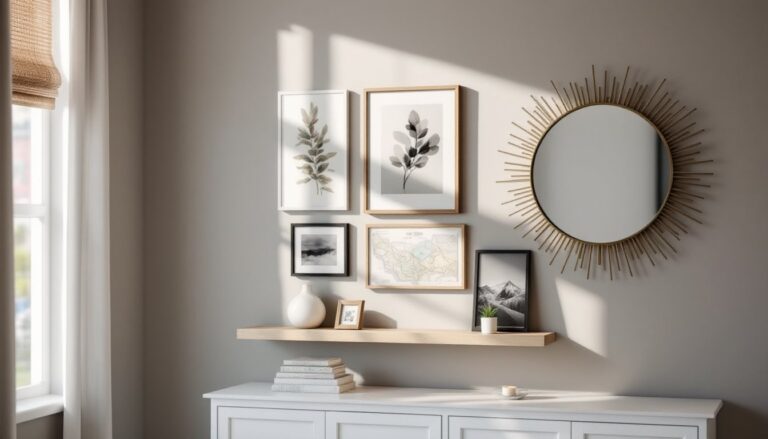
Artwork and wall decor: Framed botanical prints, black-and-white coastal photography, or watercolor seascapes work better than mass-produced “beach sign” art. Consider a large-scale piece, a 24×36-inch framed print or canvas, as a focal point above the bed. Simple wood or white-painted frames keep attention on the image.
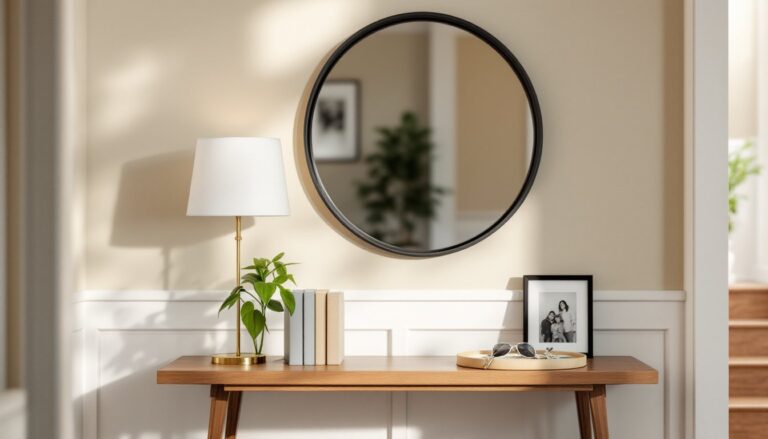
Mirrors expand light and space. A round or rectangular mirror with a jute-wrapped or whitewashed wood frame fits the aesthetic. Hang it opposite a window to maximize natural light.
Keep surfaces uncluttered. A room-by-room design approach often emphasizes restraint, two or three well-chosen items per dresser or nightstand. A small potted succulent, a ceramic bowl, or a single piece of coral (ethically sourced or faux) is enough.
Greenery adds life. Low-maintenance plants like pothos, snake plants, or spider plants thrive indoors and complement coastal decor. Avoid overly tropical plants unless the room gets strong natural light.
If incorporating shells, driftwood, or beach finds, display them sparingly. A shallow wooden bowl with a few sand dollars or a glass jar with collected sea glass feels intentional. A shelf lined with dozens of shells reads as clutter.
Avoid tchotchkes, artificial florals, or overtly themed items. Coastal bedroom design for adults relies on suggestion, not statement.
Lighting Ideas to Enhance Your Coastal Bedroom
Lighting in a coastal bedroom should be layered and soft. Overhead fixtures, task lighting, and ambient sources all play a role.
For overhead lighting, consider a flush-mount or semi-flush fixture in white, brushed nickel, or natural rope-wrapped metal. Avoid ornate chandeliers. If the ceiling can support it, a simple drum shade pendant in linen or rattan works well. Ensure the fixture is rated for the bulb wattage you plan to use, most bedrooms do fine with 60–75W equivalent LED bulbs in warm white (2700–3000K).
Table lamps on nightstands should be proportional, 14 to 24 inches tall depending on nightstand height. Ceramic bases in white, soft blue, or natural clay fit the theme. Linen or cotton drum shades diffuse light evenly. Use LED bulbs to reduce heat and energy use: a 9–12W LED (60W equivalent) provides ample reading light.
If reading in bed is a priority, consider swing-arm wall sconces mounted above the nightstands. These free up surface space and direct light where needed. Install them 24–30 inches above the mattress and wire them to a dimmer switch if possible.
Many regional home styles incorporate natural light as a key design element. Maximize it by keeping windows unobstructed and using sheer or semi-sheer curtains. If privacy is a concern, cellular shades in a top-down/bottom-up configuration let light in from above while screening the lower portion.
String lights or lanterns can add ambiance but use them sparingly. Battery-operated LED string lights with a warm glow work on a headboard or draped over a mirror. Avoid colored or blinking lights, they undermine the calm coastal vibe.
Conclusion
Building a coastal bedroom comes down to material honesty, restrained color, and layered texture. Start with a neutral palette, choose furniture in natural wood or painted finishes, and layer in textiles that feel lived-in. Skip the gimmicks and focus on what makes beach house bedrooms work: light, air, and simplicity. The result is a space that feels like a retreat, whether the ocean is five miles or five hundred miles away.