

Table of Contents
ToggleWorld map wall decor has quietly become one of the most versatile pieces a homeowner can hang. It works in a home office, a kid’s bedroom, a living room, or even a mudroom, anywhere curiosity and wanderlust intersect with blank wall space. Unlike trendy artwork that dates itself in a few years, a well-chosen map feels timeless, educational, and personal. Whether someone’s marking past trips with pins or simply filling a large wall without committing to family photos, a world map delivers visual impact and conversation value without the risk of looking like everyone else’s gallery wall.
Key Takeaways
- World map wall decor transcends style trends by combining visual impact with functional utility, making it a timeless investment for any room in your home.
- Framed canvas prints and 3D wooden maps offer distinct advantages: prints are affordable and replaceable, while 3D maps provide sculptural depth and require accent lighting to shine.
- Proper sizing ensures visual balance—aim for a map that fills 60–75% of your wall width, with a 60-inch map working well above sofas and a 36-inch map suiting desk areas.
- Choosing between political, topographical, or vintage-style maps depends on room function: office spaces benefit from detailed reference maps, while living areas prioritize aesthetic topographical designs.
- Strategic placement beyond the traditional above-sofa location, such as behind a desk or in hallways, maximizes visual interest and transforms underused wall space.
- Complement your world map with minimal accessories like floating shelves, travel books, and plants to enhance the look without diluting its statement-piece impact.
Why World Map Wall Decor Never Goes Out of Style
Geographic art isn’t subject to the same style cycles as subway tile or shiplap. A map from the 1960s still looks intentional today, and a brand-new one won’t feel dated in ten years. That’s partly because maps serve a function beyond decoration, they’re reference points, teaching tools, and reminders of places already visited or still on the list.
Maps also scale beautifully. A large-format world map can anchor a room the way an oversized mirror or sectional sofa does, giving weight to a wall without making it feel cluttered. In smaller spaces, a modest framed map can add sophistication without overwhelming the room. The neutral tones in most cartographic designs, grays, tans, blues, play well with nearly any color palette, from industrial metal and concrete to soft linen and wood.
Another reason maps endure: they’re inherently customizable. Travelers often add pins, stickers, or string to mark destinations. Families use them as teaching aids. Offices hang them to visualize client locations or shipping routes. Few pieces of wall decor ideas offer that kind of layered utility while still looking polished.
Popular Types of World Map Wall Decor for Every Space
Framed and Canvas Map Prints
Framed prints and stretched canvas maps are the most straightforward option for renters or anyone who wants a clean, finished look without tools beyond a hammer and picture hanger. Canvas prints typically come ready to hang, with the image wrapped around a 1.5-inch wooden stretcher frame. They’re lightweight, which makes them easier to mount on drywall with standard picture hangers rated for 10–20 pounds.
Framed maps offer more variety in finish. A thin black metal frame reads modern, while a thicker wood frame in walnut or oak feels traditional. Glass or acrylic glazing protects the print and reduces glare, though acrylic is lighter and safer in high-traffic areas or kids’ rooms. When choosing a framed map, confirm the print quality, look for at least 300 DPI resolution to avoid pixelation on large formats.
One advantage of prints: they’re replaceable. If tastes change or the map gets damaged, swapping it out costs far less than replacing a custom wood piece. They also ship flat or rolled, which keeps shipping costs down compared to bulkier 3D options.
3D Wooden World Maps
Three-dimensional wooden maps have gained traction over the past few years, especially among DIYers who appreciate the craftsmanship and texture. These are typically made from birch plywood, Baltic birch, or MDF, laser-cut into continents and countries, then layered to create depth. The result is a sculptural piece that casts shadows and changes appearance depending on lighting.
Installing a 3D map requires more planning than hanging a print. Most arrive as kits with individual pieces that mount to a backing board or directly to the wall using adhesive strips, wood glue, or small finish nails. The process takes 1–3 hours depending on complexity, and it’s not reversible without damaging the wall or the piece itself. Renters should check lease terms before committing.
These maps shine in spaces with accent lighting. A pair of adjustable track lights or LED strip lighting mounted above the map will emphasize the layered topography. Some makers offer versions stained in multiple tones, oceans in navy, continents in natural wood, mountain ranges in walnut, which adds visual interest without paint.
One consideration: 3D maps collect dust in the crevices. A soft-bristle brush or compressed air every few months keeps them looking sharp. They’re also heavier than prints, so wall anchors rated for at least 30–50 pounds are necessary, especially for maps over 48 inches wide.
How to Choose the Right World Map for Your Room
Start with wall dimensions. Measure the width and height of the space, then aim for a map that fills 60–75% of that width. A map that’s too small floats awkwardly: one that’s too large crowds the room. For reference, a 60-inch-wide map works well above a queen bed or a standard sofa, while a 36-inch map suits a desk area or hallway.
Next, consider the room’s function. A political map with country borders and capital cities makes sense in a home office or study, where it might actually get used for reference. A topographical map showing terrain, ocean depths, and elevation works better in a living room or den, where the focus is on aesthetics rather than information. Vintage-style maps, those with sepia tones and old-world typography, lean traditional and pair well with leather furniture and warm wood finishes. Minimalist maps with clean lines and monochrome palettes suit modern or Scandinavian interiors.
Color matters more than most people expect. A map with bold blues and greens can anchor a neutral room, while a black-and-white map keeps attention on furniture and textiles. If the room already has a statement rug or colorful artwork, a neutral map prevents visual competition. Many modern home decor ideas lean toward layered neutrals, making a muted map a natural fit.
Finally, think about longevity. A map with contemporary political boundaries will eventually become outdated as borders shift, though that can add character over time. Topographical and vintage-style maps age more gracefully because they’re less tied to current events.
Creative Installation Ideas and Placement Tips
The default spot for a world map is above a sofa or bed, but there are more interesting options. A map mounted behind a desk turns a home office into a command center. In a hallway, a narrow vertical map (or a series of continent panels) makes use of often-wasted wall space. In a dining room, a large map can replace the expected landscape or abstract art, giving guests something to talk about.
For multi-panel maps (triptychs or larger sets), spacing matters. Leave 2–4 inches between panels to maintain visual separation without losing cohesion. Use a level and painter’s tape to mark placement before drilling. If mounting on drywall, toggle bolts or drywall anchors rated for the combined weight are essential, standard picture hangers won’t cut it for heavy multi-panel installations.
Floating mounts work well for canvas prints and create a modern look with a small shadow gap between the wall and the piece. These require a cleat or French cleat system, which distributes weight evenly and makes leveling easier. For renters, adhesive strips rated for heavy frames (like Command Picture Hanging Strips) can support up to 16 pounds without nails, though they’re not ideal for textured walls.
Lighting deserves attention. A map placed opposite a window will benefit from natural light, but direct sunlight can fade prints over time, consider UV-protective glazing or sheer curtains. For evening visibility, picture lights or wall sconces mounted 6–12 inches above the map provide focused illumination without glare. Adjustable track lighting offers flexibility if the map is part of a gallery wall.
Styling Your World Map Decor with Complementary Elements
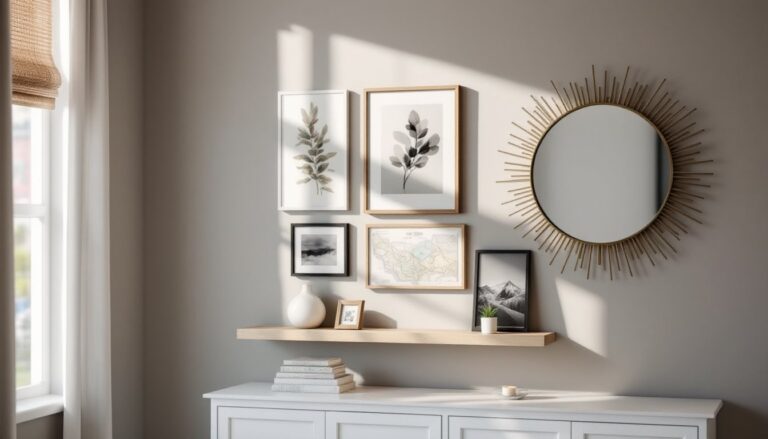
A world map rarely needs much company, but a few thoughtful additions can tie the look together. Floating shelves flanking the map create space for travel books, small globes, or framed photos from trips. Keep the arrangement asymmetrical, one shelf slightly higher than the other, to avoid a overly rigid look.
Push pins or map tacks let travelers mark visited destinations, though this only works on cork-backed maps or canvas prints (not glass-covered frames). Colored pins can indicate different trips, family members, or future plans. For a cleaner look, small adhesive dots or stickers in metallic finishes serve the same purpose without the hardware store aesthetic.
Textiles add warmth without clutter. A woven wall hanging or macramé piece hung to one side of the map softens the geometry, especially in bedrooms or living rooms. Area rugs in complementary tones, deep blue for a nautical map, tan for a vintage one, ground the space and tie the wall decor to the floor plan.
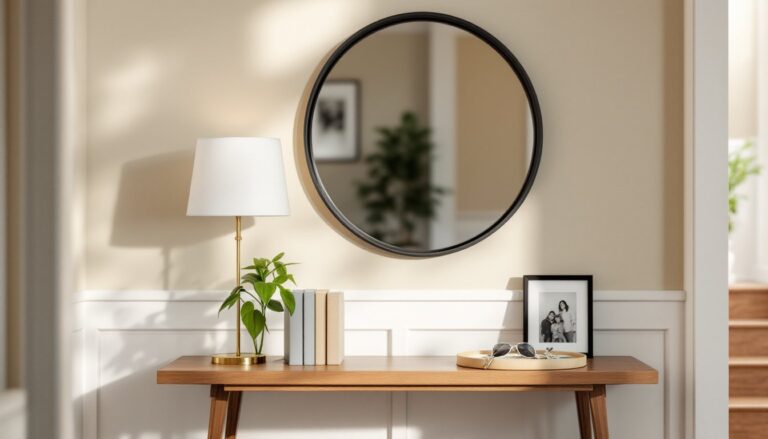
Plants work surprisingly well near maps. A tall fiddle leaf fig or snake plant in the corner balances the map’s horizontal lines with vertical interest. Smaller potted plants on adjacent shelves or a console table below the map add life without competing for attention. Many DIY decor projects emphasize mixing natural elements with graphic pieces to keep rooms from feeling flat.
Avoid overcrowding. A world map is a statement piece, and surrounding it with too many frames, signs, or decorative objects dilutes its impact. If the room needs more wall coverage, consider a second map on an adjacent wall rather than clustering unrelated items around the first.